
Artificial Intelligence is everywhere today. From voice assistants on our smartphones to recommendation systems on streaming platforms, AI quietly influences many of our daily decisions.
But an important question arises in 2026:
Are we becoming too dependent on artificial intelligence?
This is not just a technical question it is a human one.
Table of Contents
How Artificial Intelligence Entered Our Daily Lives
Artificial Intelligence is no longer limited to research labs. It powers tools like ChatGPT developed by OpenAI, recommendation systems used by Netflix, and navigation systems that guide our daily travel.
Many people now rely on AI for:
- Writing assistance
- Route planning
- Shopping recommendations
- Financial fraud detection
- Medical data analysis
What once required human judgment is now often automated.
Why AI Dependence Feels Convenient
Artificial intelligence makes life easier. It reduces effort and saves time.
For example:
- Instead of searching manually, AI suggests what to watch.
- Instead of remembering routes, GPS decides the fastest path.
- Instead of analyzing large datasets, AI systems generate insights instantly.
Convenience is powerful. And humans naturally choose easier options.
But convenience can slowly turn into dependence.
Are We Becoming Too Dependent on Artificial Intelligence? Key Signs to Watch
Let’s examine some subtle changes:
1. Reduced Critical Thinking
When AI gives instant answers, people may stop questioning information.
2. Decision Outsourcing
From career suggestions to health tracking, decisions are increasingly influenced by algorithms.
3. Creativity Assistance
Many individuals now rely on AI tools to generate ideas, drafts, or solutions.
While AI assistance is helpful, over-reliance may weaken independent thinking skills.
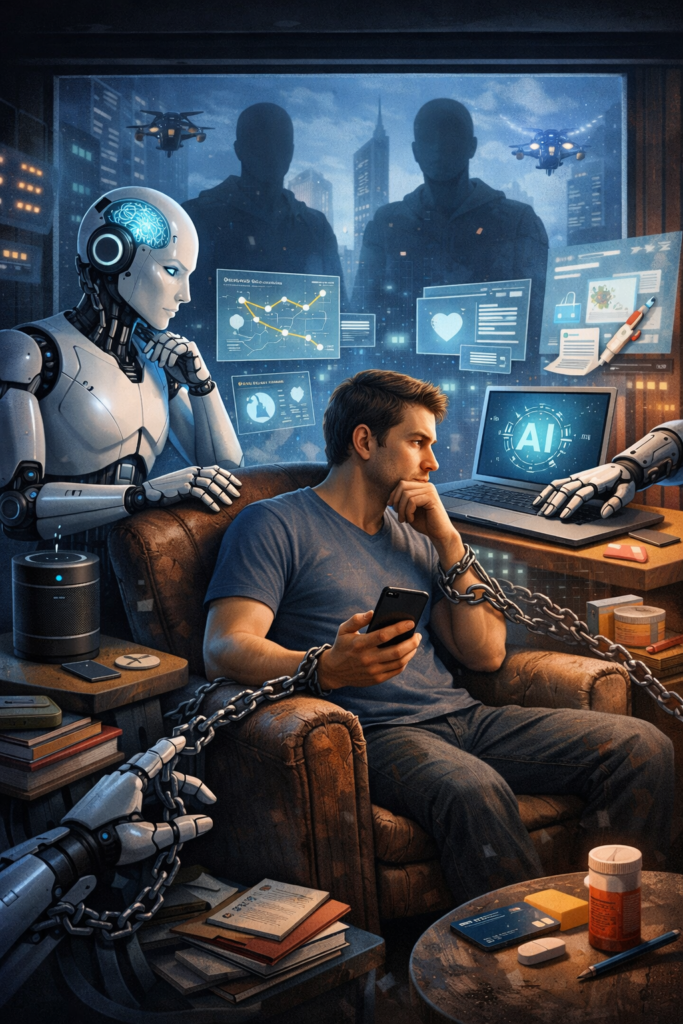
The Psychological Impact of AI Dependence
Studies from institutions like MIT suggest that automation can change how humans interact with information.
When systems predict our needs, we may become passive consumers rather than active thinkers.
This does not mean AI is harmful.
It means balance is necessary.
Is Artificial Intelligence Replacing Human Intelligence?
No.
Artificial Intelligence processes data patterns. It does not experience emotions, consciousness, or human intuition.
AI systems follow mathematical models. Humans combine logic with empathy, ethics, and creativity.
Artificial intelligence can support decision-making — but it cannot replace human values.
The Benefits of Artificial Intelligence Dependence
Not all dependence is negative.
AI helps:
- Improve medical diagnostics
- Detect fraud faster
- Increase workplace productivity
- Provide accessibility tools for disabled individuals
In many industries, artificial intelligence improves accuracy and efficiency.
The problem is not usage.
The problem is blind dependence.
How to Use Artificial Intelligence Without Losing Control
Here are healthy ways to balance AI usage:
- Verify AI-generated information
- Maintain independent thinking
- Use AI as assistance, not authority
- Develop real-world skills alongside digital tools
Artificial intelligence should enhance human potential not replace it.
The Future of Human and AI Collaboration
The future is not “humans vs AI.”
It is “humans with AI.”
Artificial intelligence will continue growing in healthcare, cybersecurity, education, and business automation.
The real question is:
Will we control AI responsibly, or allow it to control our thinking?
Balance will determine the outcome.
Frequently Asked Questions
Is artificial intelligence dangerous?
Artificial intelligence itself is not dangerous. Misuse or overdependence can create risks.
Are humans becoming lazy because of AI?
AI reduces effort in some areas, but it also creates new opportunities and skills.
Can AI think like humans?
No. AI analyzes data patterns but does not possess consciousness or emotions.
Final Thoughts
So, are we becoming too dependent on artificial intelligence? The answer depends on how we choose to use it. When used wisely, AI enhances human capability. When followed blindly, it may weaken independent thinking.
Possibly — but dependence is a choice.
Artificial intelligence is a powerful tool. When used wisely, it expands human ability. When relied on blindly, it may reduce critical thinking.
The responsibility lies not in the technology — but in how we use it.
Learn more in our complete guide on Artificial Intelligence. What Is Artificial Intelligence (AI)? A Fun & Simple Guide for Beginners (2026)
OpenAI CEO Sam Altman has stated that AI should augment human intelligence, not replace it.
“AI Won’t Replace Humans” Quote: Use this Financial Express article to cite Altman’s widely discussed claim that the real divide will be between people who use AI and those who don’t.