
As Apple accelerates its push into artificial intelligence while navigating tariffs and global supply chain challenges, the company is preparing for a major leadership transition that could redefine its future.
On Monday, Apple officially announced that John Ternus will take over as CEO later this year, succeeding Tim Cook.
A New Chapter After Tim Cook
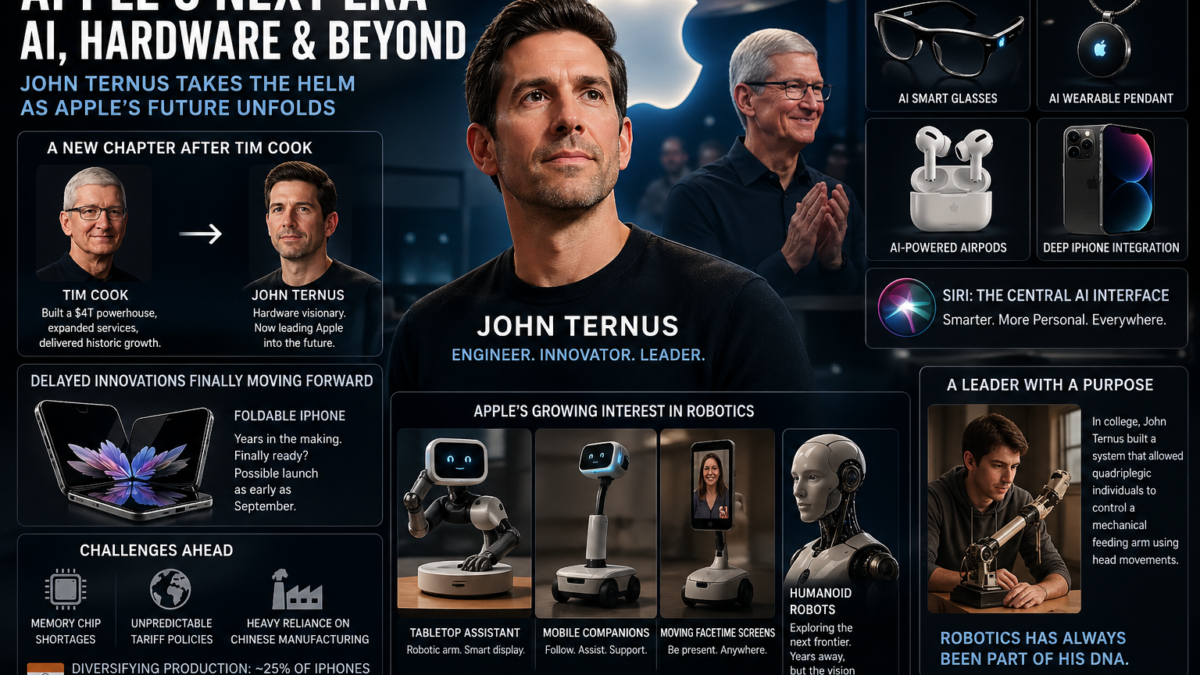
Tim Cook leaves behind an extraordinary legacy. Under his leadership, Apple grew into a $4 trillion global powerhouse, significantly expanded its services division, and delivered some of the most profitable years in tech history.
John Ternus, however, brings a different perspective.
Having joined Apple in 2001, Ternus built his career within the company’s hardware engineering division. He has played a key role in developing some of Apple’s most iconic products, including AirPods, Apple Watch, and Vision Pro.
His appointment signals a strategic shift one that places hardware innovation back at the center of Apple’s future.
AI-Powered Hardware Takes Center Stage
Rather than directly competing with companies building massive AI models, Apple under Ternus is expected to focus on AI-driven devices.
The vision is simple:
Make AI more personal, integrated, and seamlessly embedded into everyday devices.
Speculation around upcoming products includes:
- Smart glasses powered by AI
- A wearable pendant with a built-in camera
- Advanced AI-enabled AirPods
- Deep integration with the iPhone ecosystem
In this ecosystem, Siri is expected to play a much larger and smarter role, acting as the central AI interface across devices.
Delayed Innovations Finally Moving Forward
Ternus is also likely to accelerate projects that have been in development for years.
One of the most anticipated products is the foldable iPhone a device long rumored but delayed as Apple waited for the technology to mature. Reports suggest a possible launch as early as September, which would fall under Ternus’s leadership.
Apple’s Growing Interest in Robotics
Beyond wearables and smartphones, Apple is reportedly exploring home robotics.
Concepts currently under discussion include:
- A tabletop smart assistant with a robotic arm and display
- Mobile robots that follow users and assist with daily tasks
- Devices that act as moving FaceTime screens
Interestingly, this direction aligns with Ternus’s personal background. During his college years, he developed a system that allowed quadriplegic individuals to control a mechanical feeding arm using head movements highlighting his long-standing interest in robotics.
More advanced ideas, such as humanoid robots, are also being explored, though they are likely years away from becoming reality.
Challenges Ahead: Supply Chain and Global Pressures
Despite the excitement, Apple faces several challenges:
- Ongoing global memory chip shortages
- Unpredictable tariff policies
- Heavy reliance on Chinese manufacturing
Previously, around 80% of iPhones were produced in China. However, Apple has been actively diversifying its production, with approximately 25% now being manufactured in India.
This shift is part of a broader strategy to reduce risk and strengthen supply chain resilience.
The Bigger Picture
John Ternus’s leadership marks a pivotal moment for Apple.
With hardware, AI, and robotics converging, the company is entering a new phase one that could redefine how users interact with technology in their daily lives.
While many of these innovations are still speculative, one thing is clear:
Apple’s next era will be deeply rooted in intelligent, AI-powered hardware.
🔗 Read More on VitalStack
- AI Market Growth Statistics in 2026: How Fast Is the Industry Growing?
- This Smart Desk Gadget Helped Me Fix My Posture While Working From Home
- How to Invest in Artificial Intelligence in 2026 (Beginner’s Guide to AI Stocks, ETFs & Startups)
- OpenAI Introduces ChatGPT Finance Tools That Connect to Bank Accounts
- Amazon’s New AI Shopping Assistant Powered by Alexa+
- Digital Health Trends in 2026: What’s Changing in Healthcare?
Enjoyed this article?
Subscribe for weekly deep-dives on AI and health — straight to your inbox.