
🚀 Introduction
What if aging could be slowed down—or even reversed?
In 2026, artificial intelligence is no longer just powering chatbots and automation. It is now entering one of the most exciting and controversial areas of science: age reversal and longevity.
Researchers and biotech companies are using AI to analyze human biology at a deeper level than ever before, aiming to extend lifespan and improve health. This breakthrough could redefine the future of healthcare.
In this article, we explore how AI is transforming anti-aging research and what it means for the future of humanity.
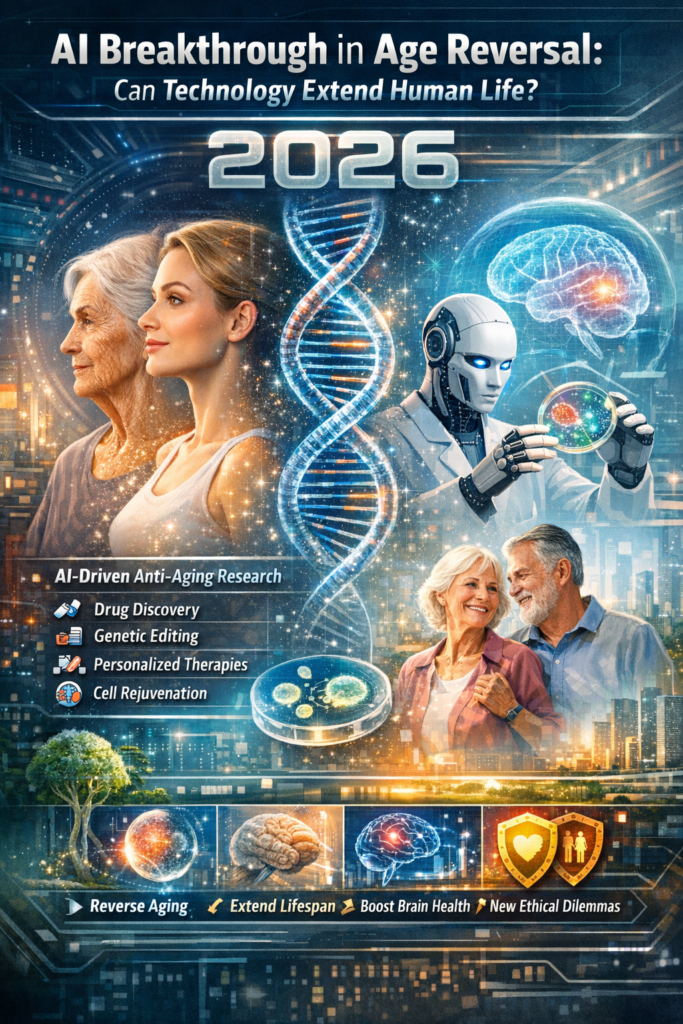
🧬 What Is Age Reversal Technology?
Age reversal refers to the process of reducing biological age, not just the number of years a person has lived.
Unlike traditional medicine, which focuses on treating diseases, age reversal aims to:
- Repair damaged cells
- Restore youthful biological functions
- Slow down or reverse aging processes
Scientists measure aging using:
- DNA changes
- Cellular damage
- Biological markers
AI is now helping researchers understand these complex processes faster than ever before.
🤖 How AI Is Powering Anti-Aging Research
Artificial Intelligence plays a major role in analyzing massive biological datasets.
Here’s how AI is being used:
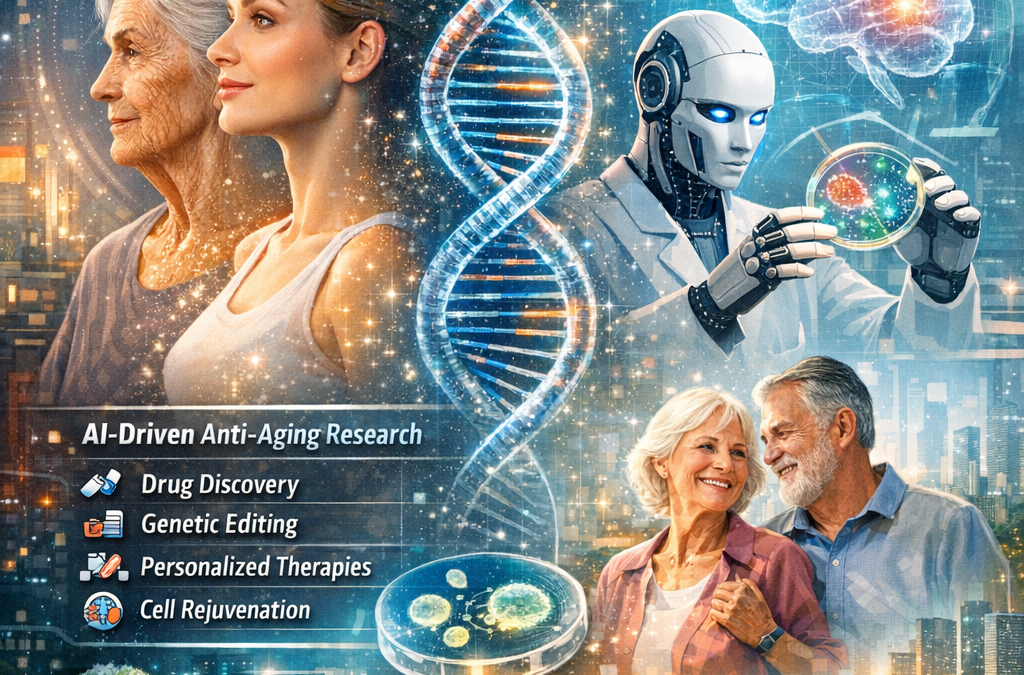
1. Drug Discovery
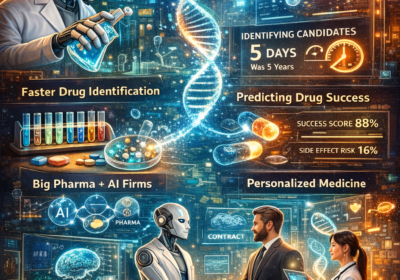
AI models can analyze millions of chemical compounds to find potential anti-aging drugs in a fraction of the time.
2. Genetic Analysis
AI helps identify genes responsible for aging and suggests ways to modify them.
3. Personalized Treatment
AI can create customized anti-aging plans based on:
- Lifestyle
- Genetics
- Health data
4. Predictive Modeling
AI predicts how cells will age and how treatments can reverse damage.
👉 This dramatically reduces research time and cost.
🧪 Current Breakthroughs in 2026
Recent developments show that AI is accelerating age reversal research:
- Scientists are experimenting with cell reprogramming techniques
- AI-driven platforms are identifying molecules that may slow aging
- Startups are working on biological age tracking systems
Some researchers believe that future therapies could:
- Reverse skin aging
- Improve brain function
- Extend human lifespan significantly
While still in early stages, progress is happening faster than ever.
🌍 Why This Matters for the World
AI-powered longevity research could transform multiple industries:
🏥 Healthcare
- Focus shifts from treatment → prevention
- Early disease detection becomes easier
💼 Economy
- Longer productive life for individuals
- Growth in biotech and AI industries
🧠 Human Life
- Better quality of life in old age
- Reduced healthcare costs
This is why major tech and healthcare companies are investing heavily in this space.
⚠️ Risks and Ethical Concerns
Despite the excitement, there are important concerns:
❗ Accessibility
Will only wealthy people afford anti-aging treatments?
🔒 Data Privacy
AI relies on sensitive health data
⚖️ Ethical Questions
Should humans extend lifespan beyond natural limits?
🧪 Scientific Limitations
Most technologies are still under research and not fully proven
👉 Responsible development is critical.
🔮 Future of AI and Longevity
Experts predict that within the next decade:
- AI will enable personalized anti-aging therapies
- Early-stage treatments may become available
- Human lifespan could increase significantly
Although we are not yet at the stage of “immortality,” AI is clearly pushing the boundaries of what is possible.
✅ Conclusion
AI is transforming the way we understand aging.
From drug discovery to genetic research, artificial intelligence is accelerating breakthroughs in longevity science. While challenges remain, the future of AI-driven healthcare looks incredibly promising.
Enjoyed this article?
Subscribe for weekly deep-dives on AI and health — straight to your inbox.