
Artificial intelligence is rapidly transforming industries ranging from healthcare to finance, and now it may be changing the future of weather forecasting as well.
WindBorne Systems, a startup founded by former Stanford students, has introduced a new AI-powered weather forecasting model called WeatherMesh-6. According to the company, the system delivers faster and more accurate forecasts than some of the world’s most trusted weather prediction agencies.
If the claims prove true, this could mark a significant shift in how weather forecasts are generated and delivered worldwide.
How WindBorne’s AI Forecasting Works
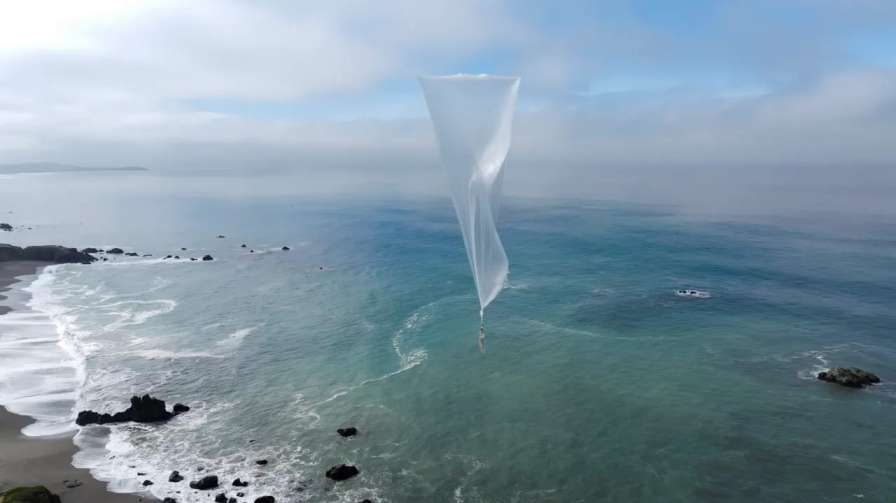
Unlike traditional weather forecasting systems that rely heavily on massive supercomputers and complex physics simulations, WindBorne uses artificial intelligence combined with real-time atmospheric data collected from hundreds of weather balloons.
The company currently operates around 400 active weather balloons across multiple regions worldwide. These balloons continuously gather temperature, pressure, humidity, and wind data, which is then processed by the company’s AI models.
This approach allows WindBorne to update forecasts every hour, compared to the six-hour update cycles commonly used by traditional forecasting systems.
Faster and More Detailed Predictions
One of the biggest advantages of WeatherMesh-6 is its ability to produce highly detailed forecasts at a local level.
The new model reportedly offers weather predictions with a resolution of up to 3 kilometers across parts of Europe and the United States. This level of precision could help communities, businesses, farmers, airlines, and emergency services make better decisions based on local weather conditions.
WindBorne also claims its forecasts remain accurate several days into the future, a challenge that has traditionally been difficult for weather prediction systems.
Why AI Is Changing Weather Forecasting
Weather forecasting has always been one of the most data-intensive scientific challenges.
Traditional models require enormous computing resources to simulate atmospheric conditions across the globe. AI models can process large amounts of data more efficiently and identify patterns much faster than conventional methods.
This means weather agencies and private companies can potentially deliver forecasts more quickly while reducing infrastructure costs.
Many experts believe AI-assisted forecasting could become a standard part of weather prediction systems over the next decade.
Real-World Applications
More accurate weather forecasts can have major benefits across industries:
- Improved disaster preparedness
- Better storm and hurricane tracking
- Enhanced agricultural planning
- Safer aviation operations
- More efficient energy management
- Smarter logistics and transportation planning
Even small improvements in forecast accuracy can save businesses and governments millions of dollars each year.
The Future of AI Weather Technology
WindBorne’s latest announcement highlights how AI is moving beyond chatbots and content generation into critical real-world applications.
As machine learning models continue to improve and access larger datasets, weather forecasting may become one of the most practical examples of AI delivering measurable value to society.
While traditional forecasting agencies remain highly trusted, startups like WindBorne are showing that artificial intelligence could play a much larger role in predicting the weather of tomorrow.
Final Thoughts
The race to build better weather forecasting systems is accelerating, and AI is becoming a major part of that transformation.
Whether WindBorne ultimately surpasses traditional forecasting agencies remains to be seen, but the company’s latest results demonstrate how artificial intelligence is reshaping industries that were once dominated by conventional computing methods.
For consumers, businesses, and governments alike, more accurate weather forecasts could mean better decisions, improved safety, and greater preparedness in an increasingly unpredictable world.
Read More on VitalStack
- AI Psychosis or Real Innovation? Why Tech Leaders Are Divided Over Artificial Intelligence
- Nvidia Unveils AI Agent PCs With Microsoft, Dell, and HP – A New Era of Personal Computing Begins
- Google’s New AI Assistant Can Work 24/7 While You Sleep
- AI Bird Feeders Are Becoming the Surprise Smart Gadget Trend of 2026
- The Browser Wars Are Back: 10 Powerful Alternatives to Chrome and Safari in 2026
Enjoyed this article?
Subscribe for weekly deep-dives on AI and health — straight to your inbox.