


As AI agents become more powerful and capable of handling real-world tasks, businesses are facing a growing challenge: how to ensure these systems behave safely, follow company policies, and avoid costly mistakes.
To address this issue, Microsoft has announced a new open-source framework called Agent Control Specification (ACS). The initiative is designed to help developers, security teams, and organizations create clear rules that guide how AI agents operate across different applications and environments.
The launch reflects a broader industry trend toward building trustworthy AI systems that can be deployed safely in enterprise settings.
Why AI Agent Control Matters
Modern AI agents can perform a wide range of tasks, including analyzing data, interacting with software tools, generating content, and automating business workflows.
While these capabilities can improve productivity, they also introduce risks.
Without proper controls, an AI agent might:
- Access sensitive information
- Perform unauthorized actions
- Use the wrong tool for a task
- Generate inaccurate responses
- Trigger workflow failures
As companies increasingly integrate AI into their operations, ensuring reliable behavior has become a top priority.
What Is Agent Control Specification (ACS)?
Agent Control Specification is Microsoft’s new open-source standard designed to give organizations greater visibility and control over AI agent behavior.
The framework allows teams to create policy files that define:
- What an AI agent can do
- What actions are restricted
- When human approval is required
- What activities should be recorded for audits
- How sensitive information should be handled
These policies act as digital guardrails that help keep AI systems operating within approved boundaries.
How ACS Works
The system continuously checks AI agent activity at multiple stages of its workflow.
Before an agent performs a task, ACS can evaluate whether the action follows company policies.
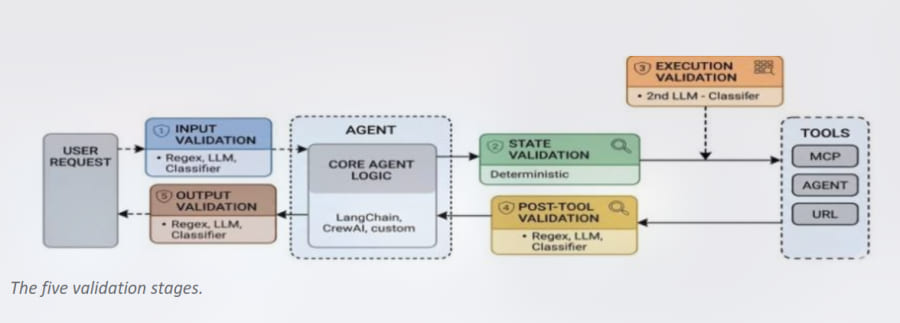
The framework can monitor:
User Input Validation
Before the AI processes information, policies can verify that the request is safe and appropriate.
Tool Access Control
Before an AI agent uses external tools or applications, ACS can determine whether access should be granted.
Output Monitoring
Responses generated by the AI can be reviewed for compliance, security, or privacy concerns before reaching users.
Human Approval Workflows
Organizations can require human review before critical actions are executed.
This layered approach helps reduce the risk of unintended behavior.
Designed for Enterprise AI Governance
One of the biggest challenges organizations face today is managing AI systems across multiple platforms and frameworks.
Many companies currently rely on custom prompts, hard-coded rules, and separate security checks, creating fragmented systems that are difficult to manage and audit.
Microsoft says ACS solves this problem by providing a unified governance layer that can travel with the AI agent regardless of where it operates.
This allows organizations to apply consistent security and compliance policies across different environments.
Broad Compatibility for Developers
Microsoft has designed ACS to work with many of today’s popular AI development frameworks.
Supported platforms include:
- LangChain
- OpenAI Agents SDK
- Anthropic Agents SDK
- AutoGen
- CrewAI
- Semantic Kernel
- Microsoft.Extensions.AI
- MCP Tools
This broad compatibility makes it easier for developers to adopt the framework without rebuilding existing AI projects.
Why This Matters for the Future of AI
As AI agents move beyond simple chatbots and begin performing business-critical tasks, governance and accountability are becoming just as important as intelligence.
Organizations need systems that can explain decisions, enforce policies, and provide transparency into how AI operates.
Microsoft’s Agent Control Specification represents an important step toward creating enterprise-ready AI systems that businesses can trust.
By introducing standardized controls, auditing capabilities, and flexible policy enforcement, ACS could help accelerate responsible AI adoption across industries.
Final Thoughts
Microsoft’s new Agent Control Specification addresses one of the biggest concerns surrounding advanced AI agents: control.
As organizations increasingly rely on autonomous systems to manage workflows and make decisions, having clear guardrails in place will become essential.
While AI capabilities continue to grow rapidly, tools like ACS demonstrate that the future of AI is not just about making agents smarter it is also about making them safer, more transparent, and easier to govern.
Read More on VitalStack
- Microsoft Launches Scout, an AI Assistant Designed to Learn How You Work
- AI Weather Startup Claims More Accurate Forecasts Than Government Agencies
- AI Psychosis or Real Innovation? Why Tech Leaders Are Divided Over Artificial Intelligence
- Google’s New AI Assistant Can Work 24/7 While You Sleep
- AI Bird Feeders Are Becoming the Surprise Smart Gadget Trend of 2026
Enjoyed this article?
Subscribe for weekly deep-dives on AI and health — straight to your inbox.