
For the past few years, Apple has faced criticism for appearing slow in the artificial intelligence race. While companies like OpenAI, Google, Microsoft, and Meta aggressively rolled out new AI products and features, Apple seemed to be taking a much more cautious approach.
Now, that strategy may finally be starting to make sense.
At WWDC 2026, Apple introduced what could be its most significant AI update yet: a redesigned Siri experience powered by Apple Intelligence and enhanced through integration with Google’s Gemini technology. Instead of launching a standalone chatbot to compete directly with ChatGPT or Gemini, Apple is embedding AI directly into the everyday experiences millions of users already rely on.
A Smarter Siri Is Finally Arriving
Apple’s biggest announcement centered around Siri, which is receiving major upgrades designed to make interactions feel more natural and helpful.
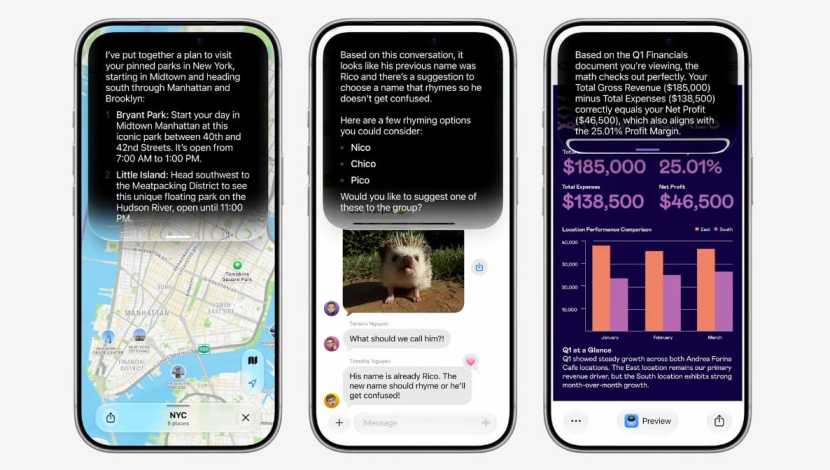
The new Siri can:
- Understand context across conversations
- Access information from emails and messages
- Provide personalized recommendations
- Understand what’s currently displayed on your screen
- Perform multi-step actions across apps
- Retrieve real-time web information through Gemini integration
These improvements aim to transform Siri from a basic voice assistant into a more intelligent digital companion.
For users, the goal is simple: spend less time searching and more time getting things done.
Apple’s Different Approach to AI
Unlike many competitors that are racing to release AI products as quickly as possible, Apple is taking a slower and more controlled path.
During WWDC, Apple’s software chief Craig Federighi emphasized that technology should solve real problems rather than exist simply because AI is trending.
This philosophy reflects Apple’s long-standing strategy of refining technologies before bringing them to the mainstream market.
Instead of asking users to learn a completely new AI platform, Apple is integrating intelligence directly into the operating system people already use every day.
Why This Strategy Could Work
Many consumers remain excited about AI, but there is also growing skepticism around privacy, misinformation, and the practical value of some AI products.
Apple is positioning itself differently by focusing on:
- User privacy
- Device-level integration
- Practical daily use cases
- Seamless user experiences
- Controlled AI deployment
Rather than overwhelming users with experimental features, Apple appears focused on making AI feel invisible and useful.
Siri vs ChatGPT, Gemini, and Claude
Apple’s upgraded Siri is not designed to replace dedicated AI chatbots entirely.
Instead, Apple is creating an AI assistant that works directly within the ecosystem users already depend on.
ChatGPT
Best for:
- Long-form conversations
- Content creation
- Research assistance
Google Gemini
Best for:
- Real-time information
- Google ecosystem integration
- Advanced reasoning tasks
Claude
Best for:
- Professional writing
- Business workflows
- Detailed analysis
Siri AI
Best for:
- Everyday device assistance
- Personal productivity
- Cross-app actions
- Apple ecosystem users
Apple’s advantage is that Siri lives inside the operating system itself, giving it access to features and workflows that third-party AI apps cannot easily replicate.
What This Means for Apple’s Business
Apple’s measured AI strategy may also make financial sense.
While major technology companies continue spending hundreds of billions of dollars on AI infrastructure and data centers, Apple has maintained a comparatively conservative approach.
The company continues generating strong revenue from hardware sales while gradually adding AI capabilities that enhance the value of existing devices.
This allows Apple to benefit from AI adoption without taking on the same level of financial risk as some competitors.
What Happens Next?
The upgraded Siri experience is expected to roll out later this year in beta form.
The real test will be whether users adopt these features in their daily lives. If Siri successfully delivers faster access to information, better productivity, and a smoother user experience, Apple may prove that winning the AI race is not about moving first it’s about delivering products people actually use.
Final Thoughts
For years, critics argued that Apple was falling behind in artificial intelligence. However, WWDC 2026 suggests that the company was simply taking a different route.
By focusing on practical AI features, privacy, and seamless integration, Apple is betting that users care more about usefulness than hype.
Whether that strategy ultimately succeeds remains to be seen, but Apple’s latest announcements indicate that its slow-and-steady approach may be turning into a competitive advantage.
FAQ’s
Is Apple launching a new AI assistant?
Apple is upgrading Siri with advanced AI capabilities rather than launching a completely separate chatbot.
What is Apple Intelligence?
Apple Intelligence is Apple’s AI framework designed to bring smart features directly into iPhone, iPad, Mac, and other Apple devices.
Does Siri use Google Gemini?
Apple announced Gemini integration for certain AI-powered tasks and web-based information retrieval.
When will the new Siri be available?
Apple plans to release the upgraded Siri experience later in 2026 through beta testing.
How is Apple’s AI different from ChatGPT?
Apple focuses on privacy, device integration, and everyday productivity, while ChatGPT is primarily a conversational AI platform.
Read More on VitalStack
- AI-Powered Forex Trading Tools Are Changing How Traders Approach the Market
- Hacked, Leaked, and Held for Ransom: The Biggest Cybersecurity Breaches of 2026 So Far
- AI’s “Tokenpocalypse” Is Here: Rising Costs Force Companies to Rethink AI Spending
- Google Reportedly Signs Massive AI Compute Deal with SpaceX Worth $920 Million
- Beyond Instagram: The New Social Apps Challenging Big Tech in 2026
Enjoyed this article?
Subscribe for weekly deep-dives on AI and health — straight to your inbox.