Healthcare technology has produced plenty of hype over the years. Some tools sounded impressive in presentations but rarely changed day-to-day medical work.
AI scribes feel different.
In 2026, hospitals and clinics are increasingly adopting ambient AI documentation systems that quietly listen during appointments and automatically generate medical notes. The goal is simple: reduce paperwork so doctors can focus more on patients instead of screens.
And honestly, this problem has been building for years.
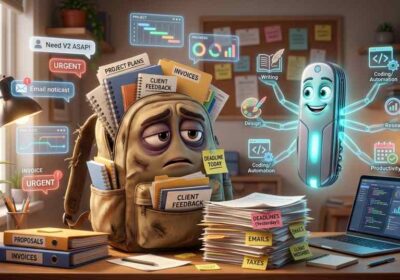
Many physicians today spend a huge portion of their day managing electronic health records, insurance documentation, appointment summaries, and compliance requirements. In some cases, doctors spend more time typing than actually talking to patients.
That’s exactly why AI scribes are getting so much attention across the healthcare industry right now.
For many healthcare workers, this may become one of the most genuinely useful applications of artificial intelligence so far.
Anyone who has visited a busy hospital recently has probably noticed how much time doctors spend typing notes into computers instead of speaking directly with patients.
What Are AI Scribes?
AI scribes are artificial intelligence systems designed to automatically create clinical documentation during medical appointments.
Instead of manually typing every symptom, diagnosis, and treatment note into a computer, doctors can speak naturally while AI software organizes the information in the background.
Most systems combine:
- Speech recognition
- Medical language models
- Natural language processing
- Context-aware AI systems
Some tools even identify medical terminology, medications, and follow-up instructions automatically.
The term “ambient documentation” is becoming especially popular because these systems work quietly in the background without interrupting conversations.
In simple words:
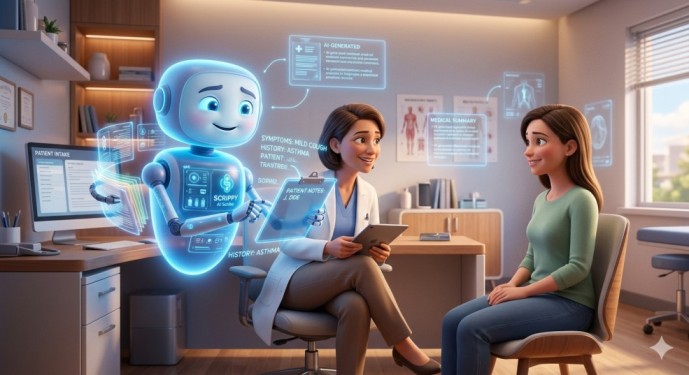
The AI listens, organizes, and drafts the notes while the doctor focuses on the patient.
Why This Technology Matters So Much in 2026
One thing many people outside healthcare don’t fully realize is how serious documentation fatigue has become.
Doctors are not only treating patients anymore.
They are also handling:
- Insurance forms
- Electronic health record updates
- Compliance documentation
- Billing-related notes
- Administrative reporting
A physician might finish clinic hours at 6 PM and still spend another 2–3 hours completing patient documentation at home.
Some healthcare professionals even call this “pajama time” because they end up doing paperwork late at night after their shifts.
And honestly, that workload has contributed heavily to burnout across healthcare systems worldwide.
This is where AI scribes are starting to make a practical difference.
Several hospitals testing ambient documentation systems report physicians saving between 1–2 hours daily.
That time savings may not sound dramatic initially.
But when multiplied across hundreds of doctors and thousands of appointments, the impact becomes significant.
A Real Example From Modern Clinics
One of the most discussed examples in healthcare AI is Microsoft’s expansion of medical documentation tools through Nuance.
After acquiring Nuance Communications, Microsoft began integrating AI-powered healthcare transcription and ambient documentation features into hospital workflows.
Doctors using these systems reported something surprisingly simple:
Appointments started feeling more natural again.
Instead of constantly turning toward a laptop during conversations, physicians could maintain eye contact and interact more directly with patients while AI handled much of the note-taking process.
Several healthcare organizations testing these systems also reported:
- Faster documentation completion
- Reduced after-hours paperwork
- Improved workflow efficiency
- Better patient interaction
And honestly, this may explain why ambient healthcare AI feels more realistic than some futuristic AI predictions people often see online.
It solves a very real daily frustration.
How Ambient Documentation Actually Works
Most AI documentation systems follow a similar process.
Step 1: The Conversation Is Captured
During an appointment, the AI system securely listens to the interaction between doctor and patient.
The software identifies:
- Symptoms
- Medical history
- Treatment discussions
- Medication references
- Follow-up recommendations
Step 2: AI Generates Structured Notes
The AI converts the conversation into organized clinical documentation.
This may include:
- Patient summaries
- Diagnoses
- Prescriptions
- Care plans
- Follow-up instructions
Step 3: The Doctor Reviews Everything
Importantly, doctors still review and approve the notes before they are added to medical records.
The AI acts like an assistant, not an independent decision-maker.
That distinction matters a lot.
Why Doctors Are Interested in AI Scribes
One important thing becoming clear in 2026 is that healthcare professionals are not necessarily looking for AI to replace them.
Most simply want tools that reduce repetitive administrative pressure.
And honestly, that makes complete sense.
Doctors train for years to care for patients, not spend hours formatting digital records.
AI scribes may help healthcare workers:
- Spend more time with patients
- Reduce administrative exhaustion
- Improve workflow speed
- Minimize repetitive typing
- Organize records more consistently
Some physicians also say patient conversations feel more human when they are not constantly focused on screens.
That small change can actually improve trust and communication during appointments.
But The Technology Still Has Limitations
Despite growing excitement, healthcare AI documentation tools are far from perfect.
Accuracy Still Matters
Medical language is complex.
A small transcription error or misunderstanding could create serious problems inside healthcare records.
That’s why doctors still need to carefully review all AI-generated documentation.
Privacy Concerns Are Growing
Patient conversations contain highly sensitive information.
Healthcare organizations must ensure:
- Secure encryption
- Regulatory compliance
- Proper data handling
- Strict access controls
As AI systems become more integrated into hospitals, cybersecurity risks will likely receive even more attention.
AI Should Not Replace Human Judgment
This is another important point.
AI scribes can assist with documentation, but they cannot replace medical expertise, emotional understanding, or clinical decision-making.
Healthcare still depends heavily on human judgment.
The Future of AI Documentation in Healthcare
Healthcare AI is evolving quickly.
Over the next few years, ambient documentation systems may become:
- More accurate
- Multilingual
- Better integrated into hospital systems
- More personalized for different specialties
Some future systems could even help generate:
- Visit summaries for patients
- Follow-up reminders
- Clinical workflow recommendations
- Real-time healthcare insights
And honestly, this trend feels less like science fiction now and more like an inevitable evolution of healthcare technology.
A Personal Observation About This Trend
One interesting thing about healthcare AI is that the most valuable tools are often not the flashy ones.
People usually imagine futuristic robots replacing doctors.
But the tools making the biggest impact right now are often the quieter systems operating in the background.
Removing repetitive digital tasks may sound simple.
Yet for exhausted healthcare professionals, reclaiming even one extra hour daily can meaningfully improve both work-life balance and patient care.
Sometimes the most important technology innovations are the ones people barely notice during everyday use.
Many healthcare professionals are not looking for AI to replace them. They simply want tools that reduce repetitive work and allow them to focus more on patient care.
Final Thoughts
AI scribes and ambient documentation systems are becoming one of the most practical real-world uses of artificial intelligence in healthcare.
By helping doctors reduce paperwork and administrative overload, these systems are improving efficiency while allowing more focus on patient interaction.
The technology still faces important challenges involving:
- Accuracy
- Privacy
- Security
- Human oversight
However, the early results are already showing why so many hospitals and clinics are exploring these systems in 2026.
And honestly, this may be one of the clearest examples of AI working best as a supportive tool rather than a replacement for human professionals.
In healthcare, giving doctors more time to focus on people instead of paperwork could become one of AI’s most valuable contributions over the next decade.
Enjoyed this article?
Subscribe for weekly deep-dives on AI and health — straight to your inbox.