

Amazon is pushing artificial intelligence deeper into online shopping.
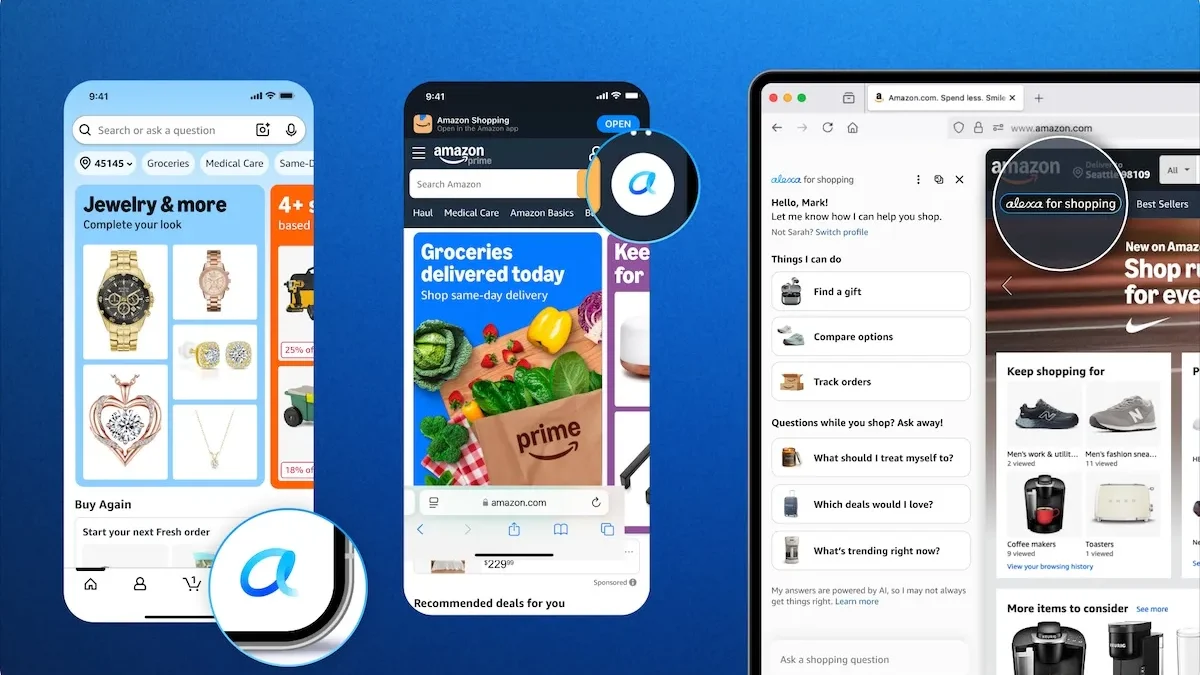
The company has officially introduced “Alexa for Shopping” a new AI-powered shopping assistant designed to make buying products feel more personalized, automated, and conversational.
The feature is powered by Alexa+ and is now available for customers in the United States.
Interestingly, this new assistant is also replacing Rufus, Amazon’s earlier generative AI shopping tool that launched in 2024.
But unlike Rufus, which mainly focused on product discovery and comparisons, Alexa for Shopping aims to become a much more personal shopping companion.
Shopping on Amazon Is Becoming More Conversational
Amazon says users can now interact with the shopping assistant directly through:
- The main Amazon search bar
- A dedicated Alexa shopping chat
- Mobile devices
- Desktop
- Echo Show smart displays
Instead of typing simple keywords like “wireless headphones” or “running shoes,” users can ask more natural questions.
For example:
- “What’s a good skincare routine for men?”
- “When did I last order AA batteries?”
- “Find a laptop for video editing under $1000”
The assistant then responds with personalized suggestions based on:
- Shopping habits
- Purchase history
- User preferences
- Previous orders
This reflects a larger shift happening across the tech industry where search experiences are slowly becoming more conversational and AI-driven.
Amazon Wants AI to Handle More of the Shopping Process
One of the most interesting parts of Alexa for Shopping is how much automation Amazon is introducing.
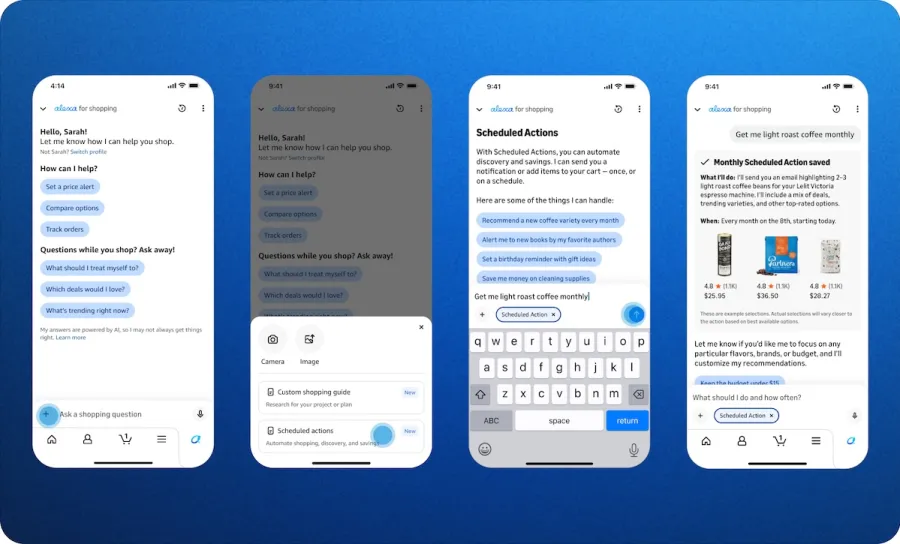
The assistant can:
- Compare products
- Track prices
- Create shopping guides
- Schedule recurring orders
- Add products automatically when prices drop
For example, users can say:
“Add this sunscreen to my cart if the price drops to $10.”
That level of automation moves AI shopping assistants beyond simple recommendations and closer to fully managing parts of the shopping experience.
Amazon also says the assistant can help purchase products outside of Amazon through its “Buy for Me” feature, which allows AI to complete purchases from other online stores on behalf of the user.
That feature may sound convenient, but it also raises important questions around AI autonomy and trust.
The Bigger AI Trend Behind This Launch
Amazon’s announcement is part of a much larger industry trend.
Technology companies are increasingly building AI systems that do more than answer questions. Instead, they want AI to:
- Make decisions
- Predict user needs
- Automate routine tasks
- Personalize digital experiences
This trend is already visible across:
- Search engines
- Productivity tools
- Customer service platforms
- Smart assistants
- E-commerce
Shopping is now becoming one of the biggest battlegrounds for AI companies.
The reason is simple: personalized recommendations can strongly influence what users buy.
AI Shopping Assistants Could Change Online Buying Habits
Traditional online shopping usually requires users to:
- Search manually
- Compare products
- Read reviews
- Track prices themselves
AI assistants aim to simplify that process.
Instead of spending time researching products individually, users may increasingly rely on AI systems to:
- Recommend products
- Summarize reviews
- Suggest alternatives
- Monitor discounts
- Automate reorders
This could save time, especially for everyday purchases like:
- Household supplies
- Groceries
- Skincare
- Pet products
However, some people may also feel uncomfortable giving AI systems too much control over purchasing decisions.
Privacy and Trust Will Matter
As AI assistants become more deeply connected to shopping behavior, privacy concerns will likely grow as well.
Alexa for Shopping uses personal information such as:
- Purchase history
- Shopping habits
- Preferences
- Order activity
Amazon says the assistant becomes “more personal and more helpful over time” by learning from customer behavior.
For some users, that personalization may feel useful.
For others, it may raise concerns about:
- Data collection
- Consumer profiling
- AI-driven purchasing influence
This balance between convenience and privacy is becoming one of the biggest conversations in modern AI products.
Amazon Continues Expanding AI Across Its Ecosystem
The launch of Alexa for Shopping comes shortly after Amazon introduced several other AI-focused features, including:
- Faster delivery services
- AI-generated audio responses for product questions
- Expanded Alexa+ experiences
It’s becoming increasingly clear that Amazon sees AI as central to the future of e-commerce.
And honestly, this shift was probably inevitable.
As AI assistants become smarter and more integrated into everyday life, online shopping platforms are naturally evolving from simple marketplaces into interactive AI-powered ecosystems.
Final Thoughts
Amazon’s new Alexa for Shopping assistant shows how quickly AI is reshaping online commerce.
Instead of simply searching for products, users are now entering an era where AI can:
- Recommend purchases
- Monitor prices
- Automate shopping tasks
- Learn personal preferences
- Handle parts of the buying process automatically
For busy users, that convenience could become extremely attractive.
At the same time, the rise of AI-powered shopping assistants also raises important questions about privacy, trust, and how much decision-making people are comfortable handing over to artificial intelligence.
One thing is clear though: AI is no longer just changing how people search online.
It’s starting to change how people shop entirely.
Source inspiration: Based on publicly available reporting and announcements, rewritten with additional analysis and commentary for VitalStack readers.
Enjoyed this article?
Subscribe for weekly deep-dives on AI and health — straight to your inbox.