

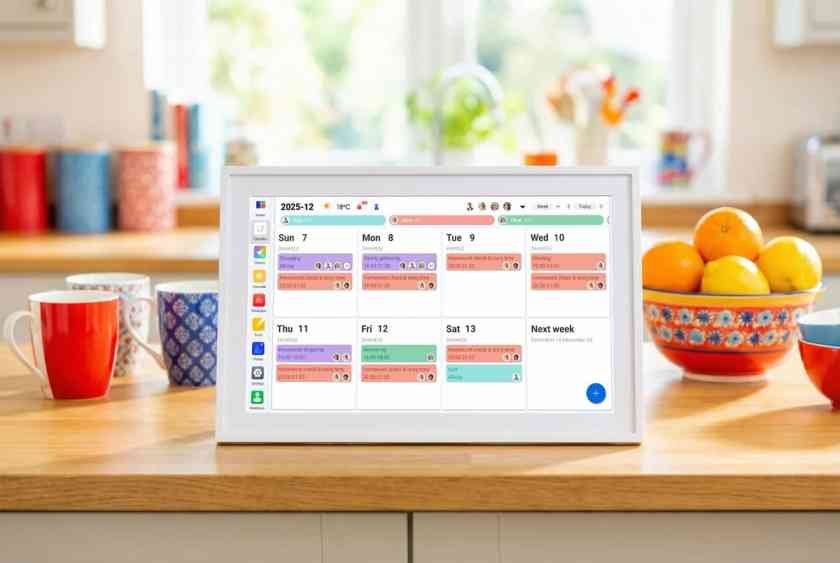
Keeping track of a busy household can quickly become complicated. Between school schedules, work meetings, appointments, sports, chores and grocery shopping, families often end up using several different apps just to stay organized.
Linkdaze is trying to simplify that process with a touchscreen smart calendar designed for the entire household.
Unlike a traditional digital calendar that mainly focuses on appointments, the Linkdaze smart calendar combines scheduling with household tasks, meal planning, shopping lists and other everyday organization tools.
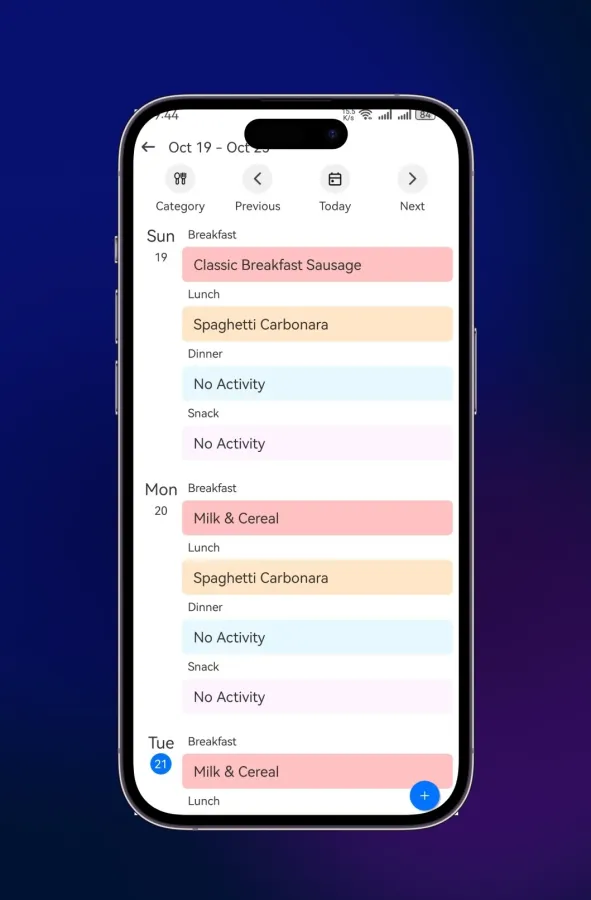
One of its more interesting features is an AI-powered meal planner that can turn information from a photo into a digital meal plan and shopping list.
The company offers the device in two screen sizes and supports calendars from several popular services, making it possible for different members of a household to keep their existing calendar systems.
What is the Linkdaze smart calendar?
Linkdaze is a touchscreen digital calendar designed to sit in a shared household space.
The idea is relatively simple: instead of every family member managing schedules separately on their phone, everyone can see important information on one large display.
The calendar can synchronize information from services including Google Calendar, Apple iCloud, Outlook, Yahoo and Cozi.
That compatibility could be particularly useful for families that use different platforms. One person might rely on Google Calendar while another uses Outlook or iCloud. Linkdaze brings those schedules together instead of requiring everyone to move to the same service.
The calendar also uses color coding to help distinguish between different family members.
Beyond appointments, the device can be used for household chores, rewards, shopping lists and meal planning. It can even work as a digital photo frame when you aren’t using it to organize your day.
AI meal planning is one of its standout features
The most interesting part of the Linkdaze system is its AI meal planner.
Rather than typing recipes or meal schedules into an app manually, users can use a feature called Snap-to-Sync.
For example, a parent could take a picture of a printed recipe or a school lunch menu. The system can then convert the information into a digital meal plan and create a shopping list based on it.
This could save time for households that regularly plan meals for several people.
AI meal planning isn’t completely new, but putting the feature directly into a shared household calendar makes the concept more practical. Instead of switching between a calendar, recipe app and shopping-list application, users can manage several of those tasks from one screen.
The feature also shows how AI is increasingly moving beyond chatbots and into everyday household products.
Two screen sizes are available
Linkdaze currently offers the smart calendar in 10.1-inch and 15.6-inch versions.
The smaller model may work better for desks, kitchens or smaller apartments, while the larger display is more suitable for a wall-mounted family information center.
The company launched the product in late 2025 and has positioned it as a household organization device rather than simply another digital calendar.
That distinction is important because the device isn’t limited to showing dates and appointments.
Families can use it to coordinate chores, shopping, meals and other shared responsibilities from a single location.
No monthly subscription for the main features
Another feature that could make Linkdaze attractive is its subscription model.
The company’s main features don’t require a recurring monthly subscription.
That’s notable because some competing smart-calendar products use subscriptions to unlock additional functionality.
For consumers, avoiding another monthly bill can make a hardware purchase easier to justify, particularly for families already paying for multiple streaming, productivity and cloud services.
Pricing also varies by model, with the smaller version positioned as the more affordable option.
However, buyers should check the current price before purchasing because retailer discounts and promotions can change over time.
Could a smart calendar replace family scheduling apps?
Probably not completely.
Most families will still use smartphones and existing calendar apps for personal schedules. The bigger advantage of a device such as Linkdaze is that it creates a shared physical space for household information.
That’s something a phone can’t always provide.
For example, a family member walking through the kitchen could quickly check the day’s schedule without opening an app. Children can see chores or activities, while parents can keep track of appointments and meal plans.
The concept could also work outside traditional families.
Roommates could use a shared display to coordinate cleaning responsibilities, grocery shopping and shared events. Students living together could use it for study schedules and household tasks.
Smart displays are becoming more useful
Linkdaze is part of a broader trend toward smart displays that combine traditional productivity tools with AI.
Instead of using AI only to answer questions, companies are increasingly putting AI into devices that can help with planning, organization and routine tasks.
A meal planner is a relatively straightforward example, but the same idea could eventually extend to more advanced household automation.
For example, future smart calendars could potentially coordinate schedules with reminders, shopping lists, transportation information or connected home devices.
The challenge will be making these features genuinely useful without making everyday organization more complicated.
Read More on VitalStack
Enjoyed this article?
Subscribe for weekly deep-dives on AI and health — straight to your inbox.