

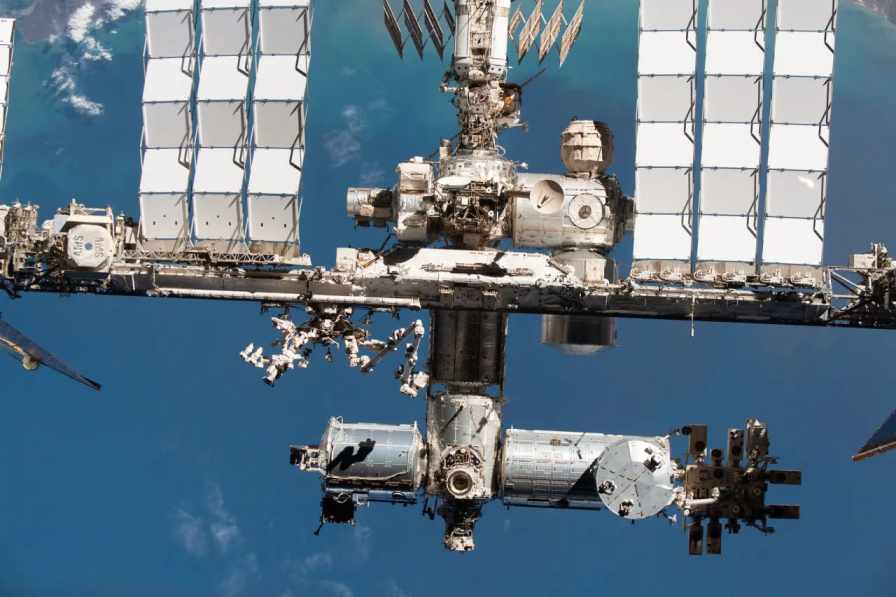
NASA briefly instructed several astronauts aboard the International Space Station (ISS) to move into a docked SpaceX Crew Dragon spacecraft after Russian engineers began investigating and repairing a suspected air leak inside one of the station’s service modules.
The precautionary move took place while Russia’s space agency, Roscosmos, carried out repair operations on a section of the station that has experienced leakage concerns in recent years.
Why Were Astronauts Moved?
According to NASA, the decision was made purely as a safety measure.
Five astronauts, including members of NASA’s SpaceX Crew-12 mission, were asked to remain inside the docked Dragon spacecraft while repair work was underway. This procedure, commonly known as a “safe haven” protocol, ensures that astronauts have immediate access to a spacecraft capable of returning them to Earth if an emergency develops.
NASA emphasized that there was no immediate danger to the crew.
Leak Concerns Continue on the ISS
The affected Russian service module has been the subject of multiple inspections over the past few years. Small cracks and air leaks have periodically raised concerns among engineers monitoring the aging space station.
While these leaks have generally remained manageable, both NASA and Roscosmos continue to closely monitor the situation because maintaining cabin pressure is critical for long-term crew safety.
Engineers initiated repairs and collected additional measurements to better understand the source of the issue.
Shelter Order Lasted Only a Short Time
Shortly after astronauts entered the Dragon spacecraft, Roscosmos paused repair activities to review new data gathered during the operation.
Following that assessment, NASA cleared the astronauts to leave the spacecraft and resume normal operations aboard the International Space Station.
The incident lasted only a brief period and did not disrupt major station activities.
SpaceX Dragon Continues to Play a Critical Safety Role
Although SpaceX Crew Dragon is primarily used to transport astronauts between Earth and orbit, the spacecraft also serves as an emergency evacuation vehicle whenever it remains docked at the ISS.
Having a ready-to-launch spacecraft attached to the station provides an additional layer of protection for astronauts during unexpected technical situations.
The successful execution of the shelter procedure demonstrates the importance of modern commercial spacecraft in supporting NASA’s long-term space missions.
The Future of the International Space Station
The leak investigation arrives at a time when the future of the ISS is under increasing discussion.
The station has been continuously occupied for more than two decades and is showing signs of aging. NASA is actively working with private industry partners to develop next-generation commercial space stations that could eventually replace the ISS later this decade.
Until then, international partners including NASA, Roscosmos, ESA, JAXA, and others continue to maintain and operate the orbiting laboratory.
What Happens Next?
Engineers from both NASA and Roscosmos will continue analyzing data collected during the repair operation. Additional inspections may be conducted to ensure the affected module remains safe and operational.
For now, all astronauts aboard the International Space Station have returned to normal activities, and NASA reports that station operations remain stable.
As space agencies prepare for future missions to the Moon and beyond, incidents like this highlight both the challenges of maintaining aging infrastructure in orbit and the importance of robust safety procedures.
Read More on VitalStack
- WWDC 2026: Everything We Expect From Apple’s Biggest AI Event Yet
- The Hidden Cost of AI: Why Companies Are Struggling to Control Exploding Token Bills
- Filtr: The New Privacy Tool That Blocks Ads Across iPhone and Mac Appss
- Cash App Launches a Magic Payment Wand: The Future of Contactless Payments or Just a Fun Gadget?
- Apple Approves First AI Agent for iMessage as Poke Expands Beyond SMS and WhatsApp
Enjoyed this article?
Subscribe for weekly deep-dives on AI and health — straight to your inbox.