
For the last two years, most AI conversations have focused on bigger models, faster responses, and massive cloud infrastructure.
But quietly, another trend has started growing in the background: local AI.
Instead of sending everything to remote servers, some developers now believe AI should run directly on personal devices whenever possible. That idea is exactly what a startup called Osaurus is trying to build around.
The company recently introduced an open-source AI platform designed specifically for Mac users. Its goal is simple but surprisingly important: allow people to use both local and cloud AI models from one place while keeping more control over their own data.
And honestly, this feels like one of those ideas that suddenly makes a lot of sense once you hear it.
Why Local AI Is Getting Attention
Most AI assistants today rely heavily on cloud computing.
Whenever users ask questions, upload files, or generate content, that information is usually processed inside large remote data centers owned by major technology companies.
For many people, that convenience is fine.
But others are becoming more cautious about privacy, especially when AI systems handle sensitive information like:
- Personal files
- Emails
- Financial documents
- Medical records
- Business data
That is where local AI becomes interesting.
Instead of constantly sending data online, local AI allows some tasks to run directly on your own computer.
In theory, that gives users more privacy, more control, and sometimes even faster performance.
What Osaurus Actually Does
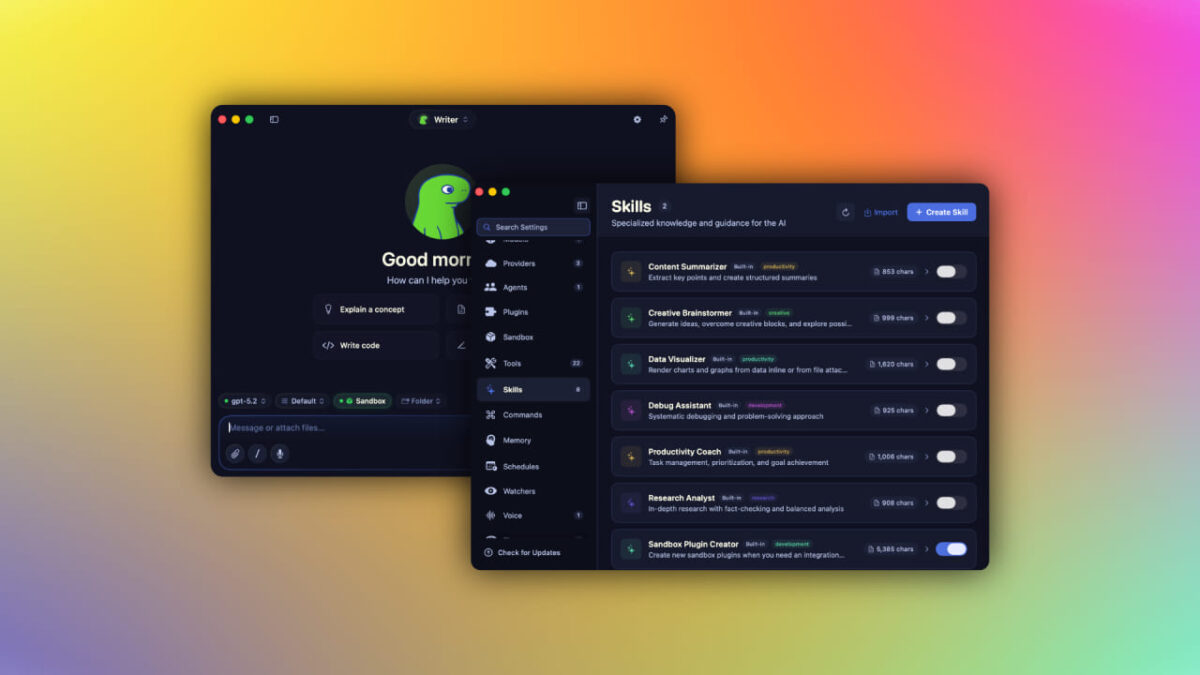
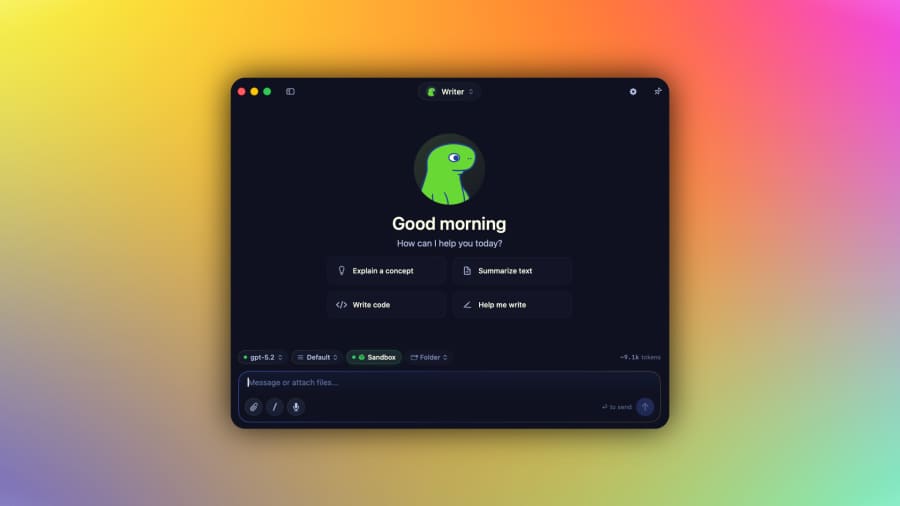
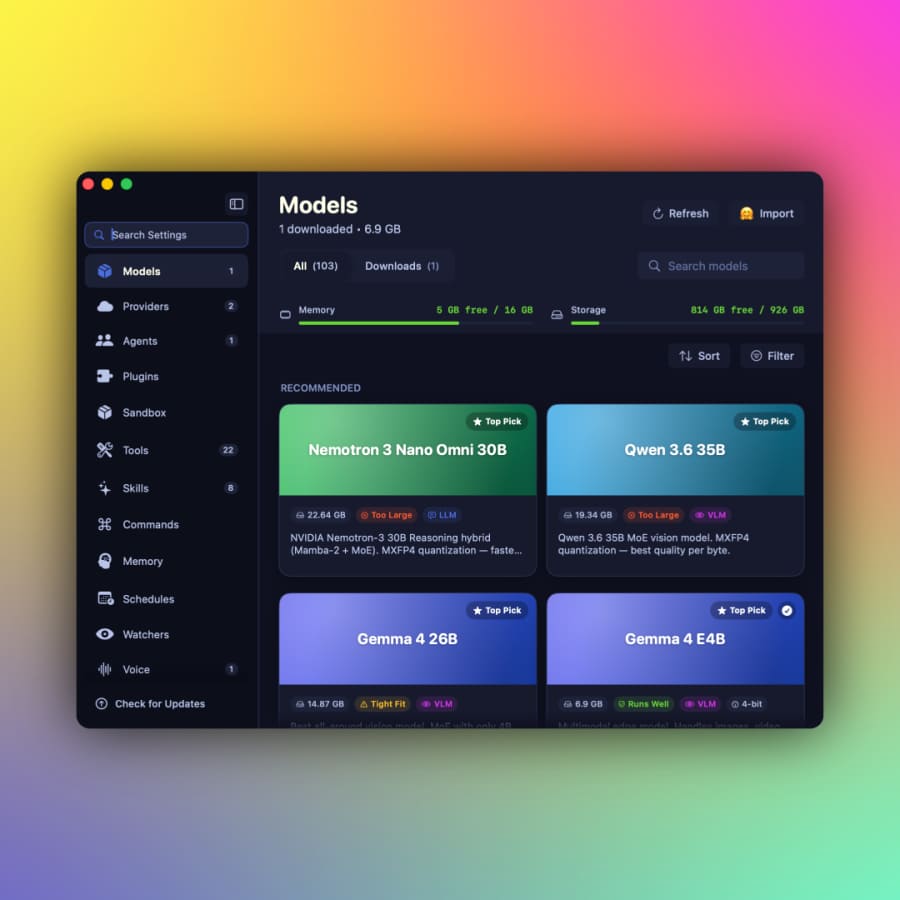
Osaurus works like a central AI workspace for macOS.
Users can connect different AI models depending on what they want to do. Some models can run locally on the Mac itself, while others can still connect through cloud providers like OpenAI or Anthropic.
What makes the platform interesting is that it tries to combine both worlds instead of forcing users into only one system.
For example, someone could:
- Run private tasks locally
- Use cloud AI for larger workloads
- Store files and AI memory directly on-device
- Switch models based on performance needs
That flexibility is becoming increasingly valuable because different AI models are good at different things.
Some models write better code.
Some are faster.
Some are better for reasoning.
Others focus more on privacy.
Osaurus is essentially trying to make all of that easier to manage.
A More Beginner-Friendly Approach
One thing that stood out about Osaurus is that it does not seem designed only for hardcore developers.
A lot of local AI tools today can feel overwhelming for normal users. Some require terminal commands, manual installations, and complicated setup processes that most people simply do not want to deal with.
Osaurus appears to be taking a different direction.
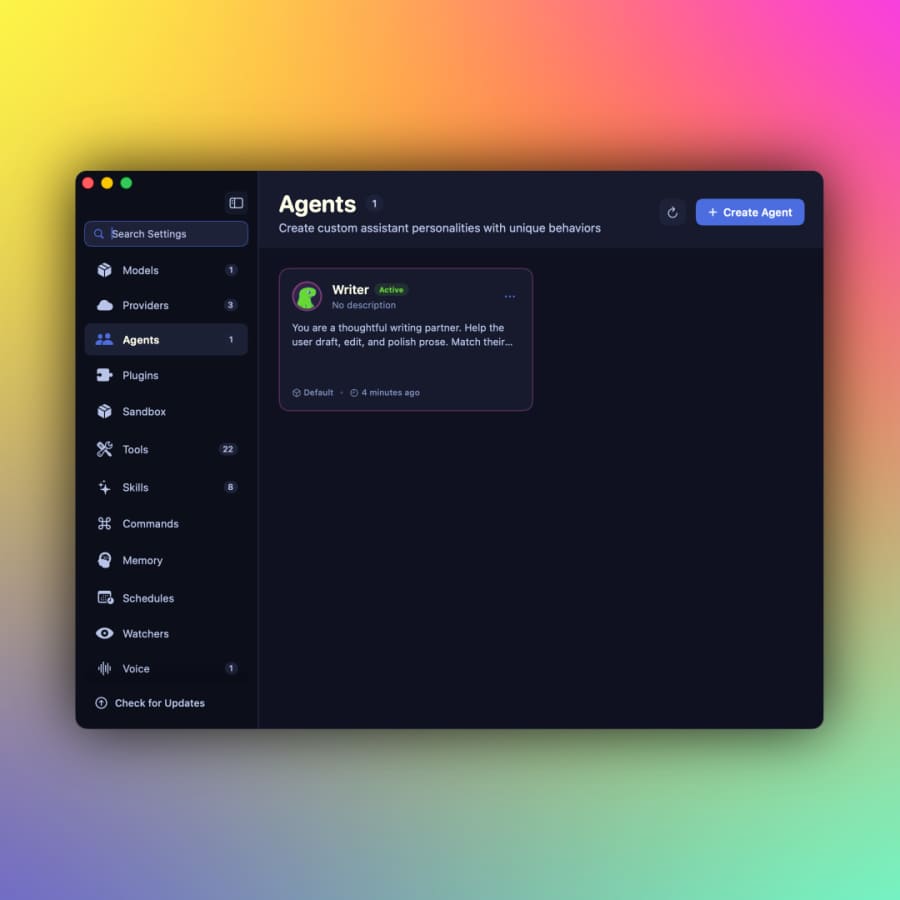
The platform includes:
- A cleaner interface
- Built-in plug-ins
- Browser access
- Voice features
- Calendar and Mail integrations
- File system tools
That may sound small, but usability matters more than many AI companies realize.
Most users are interested in AI tools that simply work without requiring hours of technical setup.
And honestly, that may become one of the biggest competitive advantages in the next phase of AI products.
The Bigger Shift Happening in AI
What makes this story interesting is not just the product itself.
It is what the product represents.
Right now, the AI industry is moving incredibly fast. New models appear almost every month, and many are becoming increasingly similar in capability.
That means companies are now competing on something else:
- User experience
- Workflow integration
- Privacy
- Accessibility
- Personalization
In other words, the future AI winners may not only be the companies building giant models.
They may also be the companies building smarter experiences around those models.
Osaurus seems to understand that shift early.
There Is Still One Big Challenge
Of course, local AI is not perfect yet.
Running advanced AI models directly on a computer still requires powerful hardware.
According to Osaurus, some larger models may require systems with:
- 64GB RAM
- 128GB RAM for heavier workloads
That is obviously far beyond what most casual users currently own.
Still, the pace of improvement is surprisingly fast.
Not long ago, local AI models struggled to generate basic responses. Today, some can browse files, write code, use tools, and handle complex tasks directly on-device.
That progress alone shows how quickly AI hardware and software are evolving together.
Why Privacy Could Become a Major Selling Point
One interesting observation about the AI industry right now is that people are becoming more aware of where their data goes.
For years, convenience was usually the top priority.
Now privacy is slowly becoming part of the conversation again.
That is especially true in industries like:
- Healthcare
- Legal services
- Finance
- Research
- Enterprise software
For businesses handling sensitive information, local AI could eventually become much more attractive than fully cloud-based systems.
And that may be why startups like Osaurus are gaining attention earlier than many expected.
Final Thoughts
Osaurus may still be an early-stage project, but it highlights something important about where AI is heading next.
The conversation is slowly shifting from:
“How powerful is the AI?”
to:
“How useful, private, and flexible is the AI experience?”
That difference matters.
For many users, the future of AI may not simply be about bigger models running inside giant data centers.
It may also involve smaller, smarter systems running directly on personal devices with more privacy and more user control.
And in 2026, that idea suddenly feels much more realistic than it did a year ago.
FAQ
What is Osaurus?
Osaurus is an open-source AI platform for Mac that allows users to run local and cloud AI models together.
Why are people interested in local AI?
Local AI offers better privacy and more control because data can stay on the user’s own device.
Does Osaurus only work on Mac?
Yes. Currently, Osaurus is designed specifically for macOS users.
Can beginners use Osaurus?
The platform focuses on being more beginner-friendly compared to many existing local AI tools.
Does local AI need powerful hardware?
Yes. Advanced local AI models still require significant RAM and modern hardware for smooth performance.
🔗 Read More Articles
Enjoyed this article?
Subscribe for weekly deep-dives on AI and health — straight to your inbox.