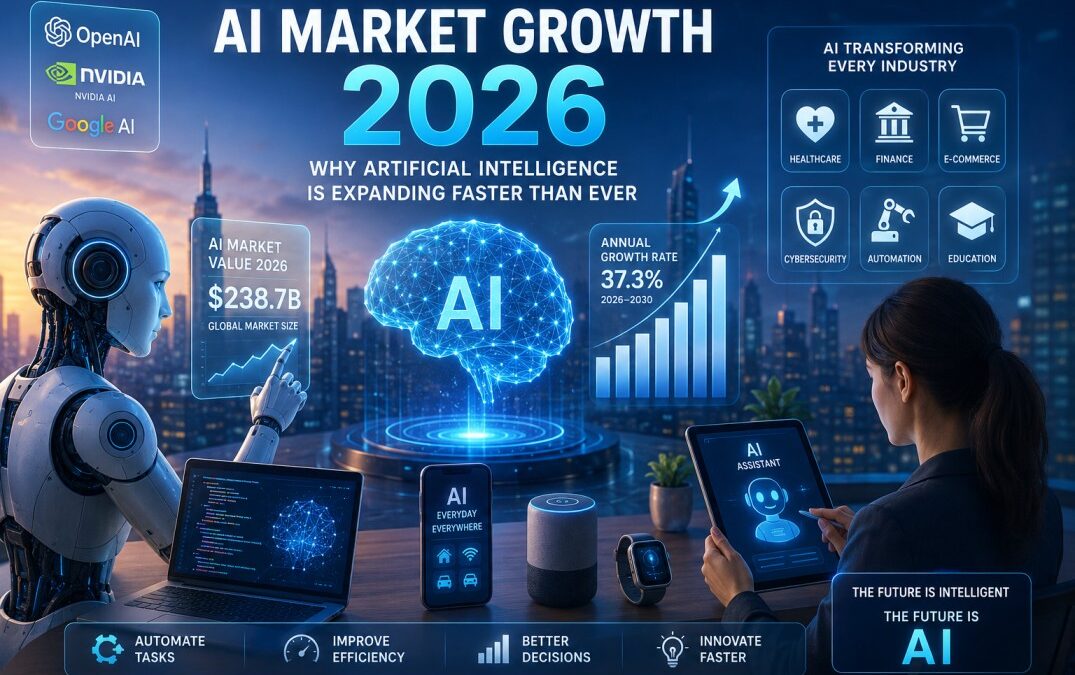
Artificial intelligence is no longer something limited to research labs or futuristic tech discussions.
In 2026, AI has become one of the fastest-growing industries in the world. Businesses, startups, healthcare companies, financial institutions, and even small creators are using AI tools daily to improve productivity, automate tasks, and make faster decisions.
What’s interesting is how quickly the AI industry has evolved in just a few years.
A few years ago, many companies were still experimenting with AI. Today, businesses are actively building strategies around it because the technology is evolving too quickly to ignore.
From AI chatbots and content generation to healthcare diagnostics and smart automation, AI is now influencing almost every major industry.
And according to current market trends, this growth is only getting started.
Why the AI Industry Is Growing So Fast
Several factors are driving the rapid expansion of the AI market in 2026.
One major reason is accessibility.
AI tools that once required advanced technical knowledge are now available to everyday users. Small businesses, students, freelancers, and creators can now use AI platforms without needing large development teams or expensive infrastructure.
At the same time, companies are under pressure to:
- Reduce operational costs
- Improve efficiency
- Automate repetitive work
- Analyze large amounts of data faster
Artificial intelligence helps solve many of these challenges.
Cloud computing has also played a huge role in AI growth. Businesses can now access powerful AI systems online without building massive infrastructure themselves.
This combination of accessibility and demand is accelerating AI adoption across the world.
What makes AI different from many previous technology trends is the speed of adoption. Businesses are integrating AI into their workflows much faster than many experts originally expected.
One interesting thing about the AI industry is that growth is happening almost everywhere at the same time. From healthcare and finance to education and cybersecurity, artificial intelligence is influencing how modern systems operate.
Generative AI Changed Everything
One of the biggest turning points for the AI market came from the rise of generative AI.
Tools powered by advanced AI models can now:
- Generate written content
- Create images
- Write code
- Summarize research
- Assist customer support
- Automate workflows
For many businesses, these tools save time and increase productivity.
Marketing teams use AI for content creation.
Developers use AI coding assistants.
Healthcare researchers use AI to analyze medical data.
Even students are using AI tools to improve learning and research.
This widespread adoption has pushed AI from a niche technology into a mainstream business solution.
Industries Investing Heavily in AI
AI growth is happening across nearly every sector, but some industries are adopting the technology much faster than others.
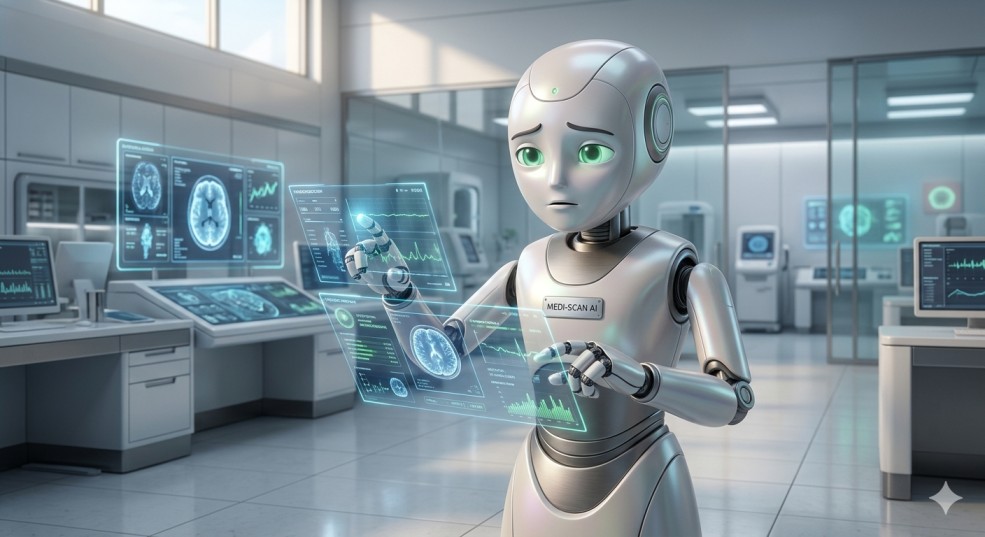
Healthcare
Healthcare is becoming one of the most important areas for AI innovation.
Medical companies now use AI for:
- Drug discovery
- Medical imaging
- Patient monitoring
- Predictive healthcare analysis
- Personalized treatment recommendations
AI is helping researchers process medical data much faster than traditional methods.
This could eventually improve both healthcare efficiency and patient outcomes.
Finance
Banks and financial institutions are heavily investing in AI systems.
AI helps financial companies:
- Detect fraud
- Analyze financial risks
- Automate customer service
- Improve investment analysis
- Process transactions faster
Modern financial systems generate enormous amounts of data daily, and AI helps companies manage that complexity more efficiently.
E-Commerce
Online shopping platforms are increasingly powered by AI.
Companies now use artificial intelligence for:
- Personalized product recommendations
- AI shopping assistants
- Inventory forecasting
- Dynamic pricing
- Customer behavior analysis
Platforms like Amazon are pushing AI deeper into online shopping experiences every year.
The goal is simple: make shopping faster, more personalized, and more automated.
Cybersecurity
As cyber threats become more advanced, AI is also becoming critical in cybersecurity.
AI systems can monitor network activity in real time and detect unusual behavior faster than manual systems.
This helps companies respond to security threats more quickly.
With cyberattacks increasing globally, AI-powered security tools are becoming more valuable than ever.
AI Startup Investment Is Booming
Investors continue pouring billions into AI startups in 2026.
Some of the biggest investment areas include:
- Generative AI
- Robotics
- Healthcare AI
- AI infrastructure
- Enterprise automation
- AI cybersecurity
What’s interesting is that many newer startups are focusing on solving specific industry problems instead of trying to build one universal AI system.
This specialized approach is helping businesses adopt AI solutions more effectively.
The Challenges Behind AI Growth
Even though the AI market is growing rapidly, the industry still faces important challenges.
Privacy Concerns
AI systems depend heavily on data.
As companies collect more information to train AI models, concerns around:
- Privacy
- Data security
- User tracking
- Ethical AI use
are becoming much more important.
Governments worldwide are already discussing stricter AI regulations.
High Infrastructure Costs
Training advanced AI systems requires enormous computing power.
Large AI models need:
- Powerful GPUs
- Massive cloud infrastructure
- Expensive data centers
This creates barriers for smaller companies that may not have large technology budgets.
Shortage of AI Talent
There is also huge demand for AI engineers, machine learning specialists, and data scientists.
Many companies struggle to hire experienced professionals because competition in the AI job market is extremely high.
This talent shortage is likely to continue for several years.
Future AI Trends to Watch
The future of AI looks even more ambitious.
Some major trends expected to shape the industry include:
Personalized AI Assistants
AI assistants are becoming more proactive and personalized.
Future systems may:
- Understand user habits
- Organize schedules automatically
- Predict user needs
- Improve productivity workflows
This shift could change how people interact with technology daily.
AI Inside Everyday Devices
Artificial intelligence is increasingly moving into:
- Smartphones
- Smart homes
- Cars
- Wearables
- Consumer electronics
Instead of relying only on cloud servers, many future AI systems may run directly on personal devices.
This could improve speed, privacy, and efficiency.
AI Regulation Will Increase
As AI becomes more powerful, regulation will likely become stricter.
Governments are already discussing rules around:
- AI transparency
- Consumer protection
- Deepfakes
- AI-generated content
- Data privacy
Responsible AI development will become increasingly important for technology companies moving forward.
Final Thoughts
The AI market growth happening in 2026 is not just another temporary technology trend.
Artificial intelligence is becoming one of the foundational technologies shaping the future of business, healthcare, education, finance, and digital experiences.
Companies that adapt to AI thoughtfully may gain significant advantages in efficiency, customer experience, and innovation over the next few years.
At the same time, the industry still faces important questions around ethics, regulation, privacy, and trust.
For beginners interested in technology, this is actually one of the most exciting times to learn about AI.
Because whether people realize it or not, artificial intelligence is already becoming part of everyday life — and its influence will likely continue growing throughout the next decade.
For beginners entering the tech world in 2026, understanding AI is becoming almost as important as understanding the internet itself.
Enjoyed this article?
Subscribe for weekly deep-dives on AI and health — straight to your inbox.