

OpenAI is taking a major step toward the enterprise market with the launch of new capabilities for Codex, its AI-powered productivity platform. The company has introduced specialized tools designed for professionals in fields such as data analytics, sales, product design, investment banking, and creative production.
The update highlights OpenAI’s growing focus on helping businesses integrate AI into everyday workflows, moving beyond traditional coding assistance and into broader knowledge work.
Codex Is Expanding Beyond Software Development
When Codex first gained popularity, it was largely known as a tool for developers and software engineers. However, OpenAI says the platform is now attracting a much wider audience.
According to the company, Codex has surpassed 5 million weekly active users, with usage growing rapidly since the launch of its desktop application earlier this year.
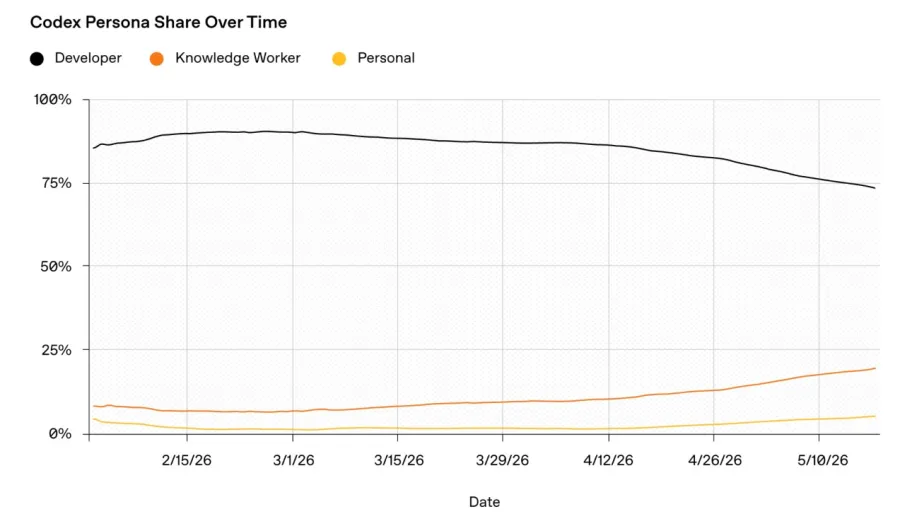
While developers still make up the largest group of users, professionals involved in research, business operations, content creation, finance, and analytics are adopting the platform at an even faster pace.
This shift reflects a growing trend in which AI tools are becoming everyday workplace assistants rather than specialized technical software.
New Industry-Specific AI Tools
To support this growing audience, OpenAI has introduced six specialized plug-ins designed for different professions.
The new tools focus on:
- Data Analytics
- Creative Production
- Sales Operations
- Product Design
- Equity Research
- Investment Banking
Each plug-in includes preconfigured instructions, workflow templates, integrations, and context designed to help users perform industry-specific tasks more efficiently.
Rather than requiring extensive setup, these tools are designed to work immediately while still allowing customization based on individual needs.
New “Sites” Feature Turns AI Output into Interactive Websites
One of the most interesting additions is a new feature called Sites.
Previously, AI-generated work was often delivered as documents, spreadsheets, presentations, or downloadable files. With Sites, users can now publish AI-generated content as interactive web experiences directly from Codex.
This allows businesses to create shareable reports, dashboards, presentations, project pages, and client-facing content without requiring additional web development work.
To support this feature, OpenAI is working with several technology partners, including:
The company says more integrations are expected in the future.
Improved Document Understanding with Annotations
OpenAI has also introduced a new Annotations feature.
This capability allows users to highlight specific sections of documents, files, or content and provide targeted instructions.
Instead of asking the AI to review an entire document, users can focus on individual paragraphs, charts, sections, or datasets.
The result is more precise outputs and better contextual understanding.
OpenAI’s Growing Enterprise Strategy
The latest Codex update comes shortly after OpenAI announced a major enterprise initiative aimed at helping businesses adopt AI technologies at scale.
Organizations worldwide are looking for ways to automate repetitive work, improve productivity, and reduce operational costs. OpenAI appears determined to position Codex as a central platform for these goals.
By offering industry-specific tools and workflow automation capabilities, OpenAI is moving beyond simple AI chatbots and toward becoming a business productivity ecosystem.
Why This Matters
The workplace is changing rapidly as AI becomes more capable of handling tasks traditionally performed by humans.
Professionals in finance, sales, marketing, design, analytics, and operations are increasingly relying on AI to:
- Analyze large datasets
- Create reports
- Draft content
- Generate insights
- Automate repetitive processes
- Improve decision-making
OpenAI’s latest Codex update reflects this broader transformation.
Rather than focusing solely on developers, the company is building tools that support knowledge workers across nearly every industry.
Final Thoughts
The latest Codex release shows how quickly AI is evolving from a coding assistant into a full workplace productivity platform.
With specialized business tools, website publishing capabilities, and improved document interaction features, OpenAI is positioning Codex as a powerful solution for modern professionals.
As businesses continue adopting AI-driven workflows, platforms like Codex could become an essential part of how organizations create, analyze, and share information in the years ahead.
Read More on VitalStack
- Microsoft Launches Agent Control Specification to Give Developers More Control Over AI Agents
- Microsoft Launches Scout, an AI Assistant Designed to Learn How You Work
- AI Weather Startup Claims More Accurate Forecasts Than Government Agencies
- AI Psychosis or Real Innovation? Why Tech Leaders Are Divided Over Artificial Intelligence
- Google’s New AI Assistant Can Work 24/7 While You Sleep
Enjoyed this article?
Subscribe for weekly deep-dives on AI and health — straight to your inbox.