
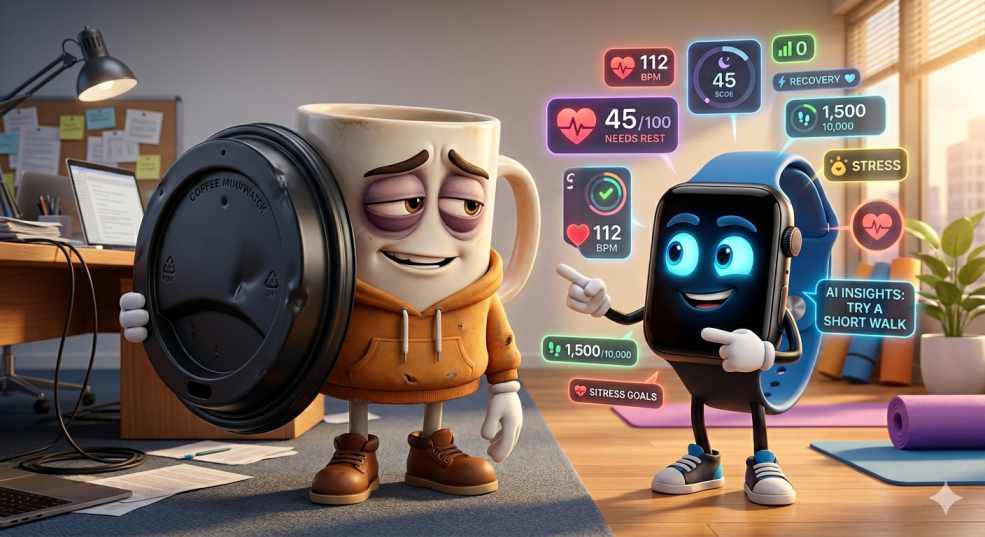
Introduction
A few years ago, most wearable devices were basically step counters.
People bought them to track daily walks and monitor basic fitness goals.
Today, things are very different.
Modern wearable devices can monitor sleep quality, heart rate trends, exercise performance, recovery patterns, stress levels, and much more.
What makes today’s wearables especially interesting is the role of artificial intelligence.
Instead of simply collecting data, many devices now analyze information and provide personalized recommendations based on your habits and activity patterns.
Over the last year, I’ve experimented with various wearable devices while trying to improve my daily routine, sleep schedule, and overall productivity.
While none of these devices can replace professional medical advice, they can provide useful insights into everyday health habits.
Let’s explore some of the most interesting wearable devices available in the AI era.
Why Wearable Technology Is Growing So Fast
People are becoming more interested in understanding their daily habits.
Questions like:
- Am I sleeping enough?
- How active am I?
- Am I recovering properly after workouts?
- How consistent is my routine?
Wearable devices help answer these questions using real-time data.
Instead of guessing, users can observe trends and make informed decisions.
This is one reason wearable technology continues to grow in popularity.
1. Apple Watch
The Apple Watch remains one of the most popular wearable devices available.
It combines health tracking, fitness monitoring, and everyday convenience in a single device.
Features
- Activity tracking
- Sleep monitoring
- Heart rate tracking
- Workout support
- Smart notifications
Personal Observation
One feature I found surprisingly useful was activity reminders.
During busy workdays, it’s easy to remain seated for hours.
The watch periodically encouraged movement, which helped improve daily activity levels.
Best For
- Everyday users
- Fitness enthusiasts
- Apple ecosystem users
2. Oura Ring
The Oura Ring takes a different approach.
Instead of looking like a smartwatch, it resembles a standard ring.
Despite its small size, it tracks numerous health metrics.
Features
- Sleep tracking
- Recovery insights
- Activity monitoring
- Readiness scores
Real Example
I tested sleep tracking using different devices.
The Oura Ring provided detailed insights about bedtime consistency and sleep patterns.
The data encouraged better evening routines and more consistent sleeping habits.
Best For
- Sleep-focused users
- Wellness enthusiasts
- Minimalist technology users
3. Fitbit Devices
Fitbit has been a major player in wearable technology for years.
Its devices focus heavily on activity tracking and wellness monitoring.
Features
- Daily activity tracking
- Sleep monitoring
- Heart rate tracking
- Exercise support
Practical Example
One friend used a Fitbit while training for a local marathon.
The ability to monitor activity trends helped create a more structured fitness routine.
Best For
- Beginners
- Fitness tracking
- Budget-conscious users
4. Garmin Smartwatches
Garmin devices are particularly popular among athletes.
These watches offer detailed performance metrics and training insights.
Features
- GPS tracking
- Running metrics
- Cycling support
- Recovery analysis
Personal Test
During outdoor walks and cycling sessions, Garmin devices provided detailed activity information that went beyond basic step counting.
The level of data was impressive for serious fitness users.
Best For
- Runners
- Cyclists
- Outdoor enthusiasts
5. WHOOP
WHOOP focuses heavily on recovery and performance.
Instead of emphasizing notifications and apps, it concentrates on helping users understand recovery trends.
Features
- Recovery tracking
- Sleep analysis
- Activity strain monitoring
- Performance insights
Why It’s Interesting
Rather than simply measuring activity, WHOOP helps users understand how daily habits influence recovery and readiness.
Best For
- Athletes
- Performance-focused users
- Health data enthusiasts
How AI Is Improving Wearable Devices
The biggest difference between older and newer wearables is intelligence.
Modern devices don’t just display numbers.
They interpret them.
For example:
Instead of showing sleep duration alone, AI can identify patterns and suggest improvements.
Instead of tracking activity only, AI can highlight long-term trends.
This makes health data easier to understand and more actionable.
My Personal Wearable Experiment
For one month, I used wearable tracking to monitor:
- Sleep consistency
- Daily movement
- Activity levels
What I Learned
The most valuable insight wasn’t a specific number.
It was recognizing patterns.
I noticed that poor sleep often affected productivity the next day.
Having data helped identify habits that were easy to overlook.
Important Reality Check
Wearable devices are useful tools.
However, they are not medical devices for diagnosing conditions unless specifically approved for that purpose.
Users should view wearable insights as informational rather than definitive medical advice.
This balanced approach helps avoid unrealistic expectations.
What to Consider Before Buying
Before choosing a wearable device, ask yourself:
- Do I care most about sleep?
- Am I focused on fitness?
- Do I want detailed analytics?
- Do I prefer simplicity?
The best device depends on your personal goals.
Final Thoughts
Wearable technology has become far more sophisticated than many people realize.
AI-powered insights, personalized recommendations, and long-term trend analysis are transforming how users understand daily habits.
The most valuable benefit isn’t the technology itself.
It’s the awareness these devices can create.
Conclusion
The AI era is changing wearable technology in exciting ways.
Devices such as the Apple Watch, Oura Ring, Fitbit, Garmin, and WHOOP provide users with new ways to monitor activity, sleep, recovery, and wellness trends.
While they aren’t replacements for professional healthcare, they can help people better understand their habits and make more informed lifestyle decisions.
FAQ’s
What is the best wearable device for health monitoring?
The best device depends on your goals. Apple Watch offers versatility, while Oura Ring focuses heavily on sleep and recovery.
Can wearable devices improve health?
Wearables can provide useful information and encourage healthier habits, but they do not replace professional medical advice.
How does AI help wearable devices?
AI analyzes health data, identifies patterns, and provides personalized insights based on user behavior.
Which wearable is best for sleep tracking?
Many users prefer Oura Ring for detailed sleep insights and recovery tracking.
Are wearable devices accurate?
Most devices provide useful trend information, but accuracy can vary depending on the device and measurement type.
Read More on VitalStack
Enjoyed this article?
Subscribe for weekly deep-dives on AI and health — straight to your inbox.