
Introduction
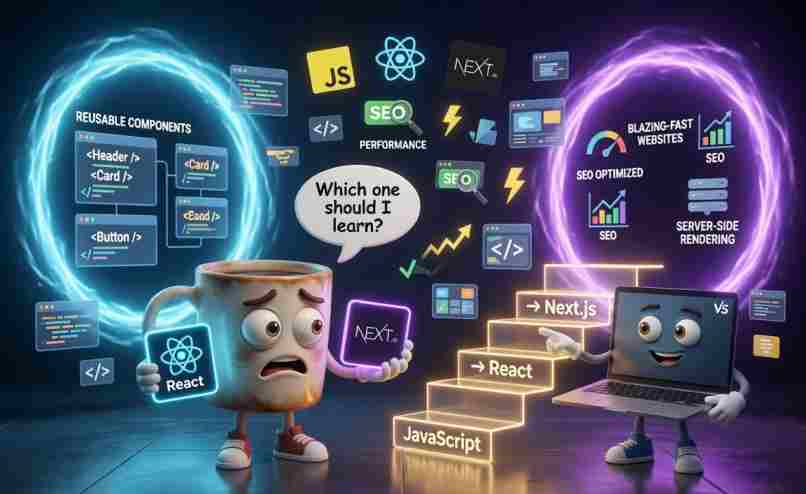
If you’re planning to become a web developer in 2026, one of the most common questions you’ll face is:
Should I learn React or Next.js?
A few years ago, the answer was simple. Most developers started with React because it was the dominant frontend library. Today, however, the web development landscape has evolved. Companies are increasingly adopting Next.js for better performance, SEO, scalability, and user experience.
Whether you’re a student, beginner programmer, healthcare tech professional, startup founder, or experienced developer looking to upgrade your skills, understanding the difference between React and Next.js is essential.
In India, the demand for React and Next.js developers continues to grow as startups, SaaS companies, healthcare platforms, e-commerce businesses, and AI-powered applications increasingly move toward modern web technologies.
In this guide, you’ll learn:
- What React and Next.js are
- Key differences between them
- Career opportunities in 2026
- Which one beginners should learn first
- Real-world examples and use cases
- My personal recommendation based on industry trends
Let’s get started.
Why React and Next.js Matter in 2026
The web is changing rapidly.
Users expect websites to:
- Load instantly
- Work on all devices
- Rank well on Google
- Provide smooth user experiences
Modern businesses cannot afford slow websites.
According to Google research, users often leave websites that take more than a few seconds to load. Performance directly affects engagement, conversions, and revenue.
This is why frameworks like Next.js have gained popularity.
Meanwhile, React remains one of the most widely used frontend technologies in the world and powers thousands of applications.
Some popular platforms using React-based technologies include:
- Netflix
- Airbnb
- Shopify
- WhatsApp Web
As we move into 2026, React and Next.js continue to dominate frontend development job listings worldwide.
What is React?
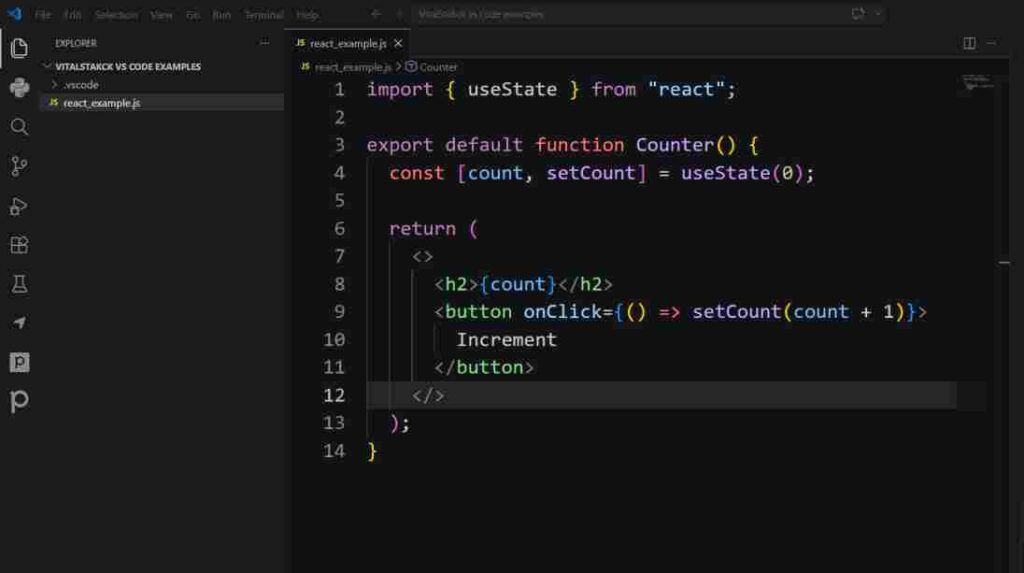
React is a JavaScript library created by Meta for building user interfaces.
It helps developers create reusable components and dynamic web applications.
React Key Features
- Component-based architecture
- Virtual DOM
- Strong community support
- Large ecosystem
- Flexible architecture
- Excellent for Single Page Applications (SPAs)
Example
Build a React Counter
Imagine building a hospital management dashboard.
Components might include:
- Patient Cards
- Appointment Tables
- Billing Modules
- Doctor Profiles
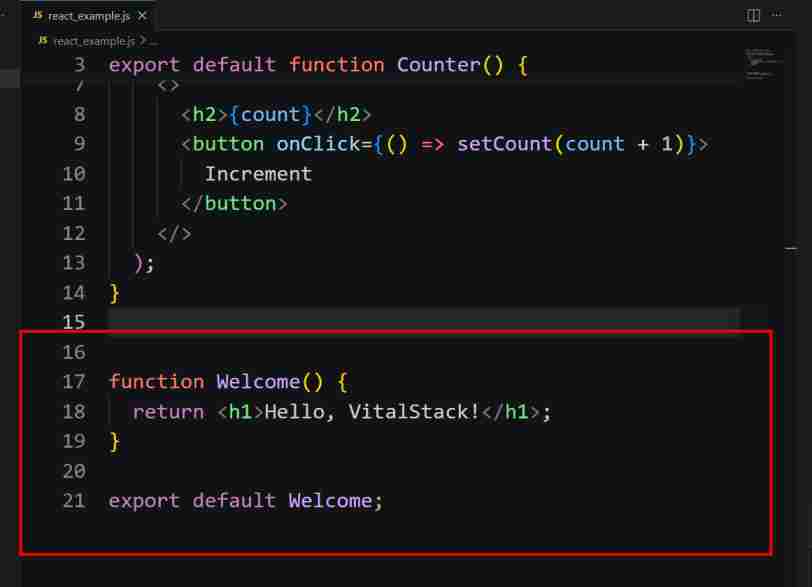
React allows these components to be reused throughout the application.
What is Next.js?
Next.js is a React framework developed by Vercel.
Think of it as React with powerful built-in features.
Instead of installing multiple libraries manually, Next.js provides:
- Server-Side Rendering (SSR)
- Static Site Generation (SSG)
- API Routes
- Image Optimization
- SEO Enhancements
- Routing System
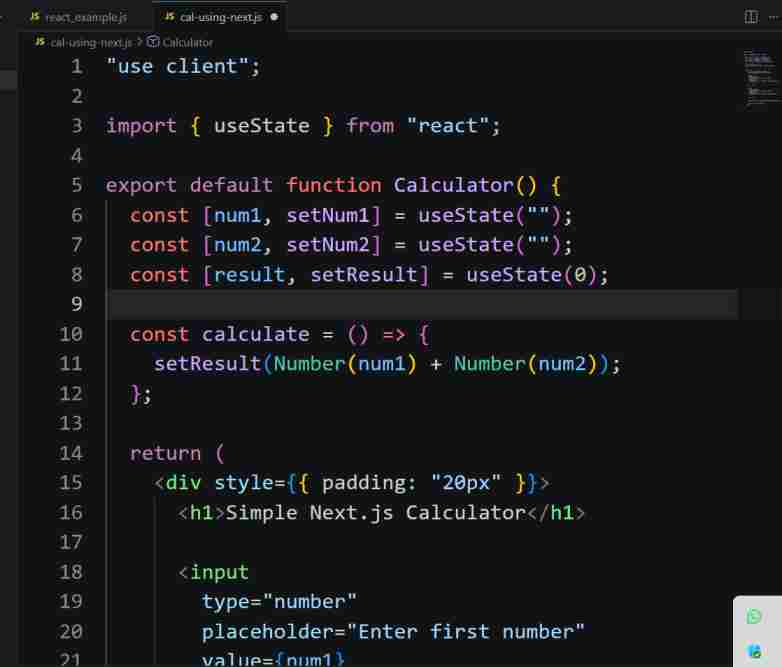
Example
Simple Next.js Calculator
Suppose you’re building a healthcare information portal.
Google rankings matter.
Patients searching for symptoms, treatments, or healthcare guides should find your website quickly.
Next.js helps improve SEO and page performance automatically.
React vs Next.js: Key Differences
| Feature | React | Next.js |
|---|---|---|
| Type | Library | Framework |
| SEO Support | Limited | Excellent |
| Routing | Requires React Router | Built-In |
| Performance | Good | Excellent |
| Server-Side Rendering | Manual Setup | Built-In |
| API Support | External Backend Needed | Built-In API Routes |
| Learning Curve | Easier | Slightly Higher |
| Best For | SPAs | Modern Web Apps |
Advantages of React
1. Easy to Learn
React remains one of the best entry points into frontend development.
2. Massive Community
Millions of developers use React worldwide.
Finding tutorials and solutions is easy.
3. High Job Demand
Many companies still hire React developers specifically.
4. Flexible Architecture
Developers can choose their preferred tools.
React Limitations
- Additional setup required
- SEO challenges
- More configuration work
- Performance optimization often manual
Advantages of Next.js
1. Better SEO
This is one of the biggest reasons businesses choose Next.js.
Search engines can index pages more effectively.
2. Faster Websites
Built-in optimizations improve loading speed.
3. Full-Stack Capabilities
Developers can create APIs directly inside Next.js projects.
4. Improved User Experience
Features like image optimization and server rendering create smoother experiences.
Next.js Limitations
- More concepts to learn
- Slightly steeper learning curve
- Can feel overwhelming for complete beginners
Real-World Examples
When React Makes Sense
A company building:
- Internal dashboards
- CRM systems
- Admin panels
- Employee management tools
SEO is less important.
React works perfectly.
Example
A hospital’s internal appointment management system.
Patients won’t access it publicly.
Google ranking isn’t necessary.
React is sufficient.
When Next.js Makes Sense
A company building:
- Blogs
- Healthcare portals
- E-commerce websites
- AI SaaS platforms
- Marketing websites
SEO and performance matter significantly.
Next.js becomes the better option.
Example
VitalStack itself could benefit from Next.js because:
- Blog content needs SEO
- Faster loading improves engagement
- Better Core Web Vitals
- Improved Google rankings
Step-by-Step Learning Path for Beginners
Step 1: Learn HTML and CSS
Understand:
- Layouts
- Responsive Design
- Flexbox
- Grid
Step 2: Learn JavaScript
Focus on:
- Variables
- Functions
- Arrays
- Objects
- Async Programming
Step 3: Learn React
Master:
- Components
- Props
- State
- Hooks
- API Integration
Build:
- Todo App
- Weather App
- Notes App
Step 4: Learn Next.js
Once React concepts are comfortable:
Learn:
- App Router
- Server Components
- SSR
- SSG
- API Routes
- Deployment
Build:
- Blog Website
- Portfolio
- Healthcare Portal
- AI Dashboard
Challenges Developers Face
React Challenge
Too many decisions.
Developers must choose:
- Router
- State Management
- Backend Integration
- Optimization Strategy
Solution
Start simple.
Avoid overengineering.
Next.js Challenge
Understanding rendering methods:
- SSR
- CSR
- SSG
- ISR
can initially be confusing.
Solution
Build small projects first before moving into enterprise applications.
Career Opportunities in 2026
React and Next.js developers are expected to remain highly valuable.
Common job roles include:
- Frontend Developer
- Full Stack Developer
- React Developer
- Next.js Developer
- SaaS Engineer
- AI Product Developer
In India, startups increasingly prefer developers who understand both React and Next.js because they can build modern applications faster.
My Take: What Should You Learn First?
If you’re completely new to web development:
Start with React.
React teaches the fundamentals of component-based development.
After gaining confidence:
Move to Next.js.
This progression feels natural because Next.js is built on top of React.
Trying to skip React entirely often creates confusion later.
Recommended Path
JavaScript => React => Next.js => Full Stack Development
This path offers the strongest foundation for long-term career growth.
Conclusion
The React vs Next.js debate isn’t really about choosing one over the other.
The reality is that they work together.
React remains the foundation of modern frontend development, while Next.js adds the tools businesses need for performance, SEO, scalability, and production-ready applications.
For beginners in 2026:
- Learn React first
- Understand component architecture
- Build practical projects
- Transition to Next.js
By mastering both technologies, you’ll be prepared for the majority of modern frontend and full-stack opportunities.
Have experience with React or Next.js?
Share your thoughts in the comments below or contact us at contact@vitalstack.co.in.
FAQ
1. Is Next.js replacing React?
No. Next.js is built on React and uses React internally.
2. Should beginners learn React or Next.js first?
Most beginners should learn React first before moving to Next.js.
3. Is Next.js better for SEO?
Yes. Next.js offers built-in SEO advantages through server-side rendering and static generation.
4. Are React developers still in demand in 2026?
Absolutely. React remains one of the most sought-after frontend skills globally.
5. Can I get a job knowing only React?
Yes, but knowing Next.js alongside React significantly improves career opportunities.
6. Which is better for startups?
Next.js is often preferred because it provides SEO, performance optimization, and full-stack features out of the box.
Read More on VitalStack
- NLP Basics: How Machines Understand Language (48 characters)
- Prompt Engineering Mastery: Better AI Outputs
- How AI Is Transforming Customer Support: Faster Responses, Better Experiences, and Smarter Service
- The Science Behind Dopamine and Motivation: Why Your Brain Loves Progress
- Daily Habits That Improve Brain Productivity: Simple Changes That Made a Big Difference
- Large Language Models Transforming Healthcare: Opportunities and Challenges in 2026
Enjoyed this article?
Subscribe for weekly deep-dives on AI and health — straight to your inbox.