
Introduction
I thought successful people woke up feeling inspired every morning and naturally stayed productive throughout the day.
My own experience told a different story.
Some days I felt highly motivated.
Other days I struggled to start even simple tasks.
Eventually, I became curious about what was happening behind the scenes inside the brain.
That’s when I started learning about dopamine.
One of the biggest misconceptions online is that dopamine is simply the “pleasure chemical.”
The reality is much more interesting.
Dopamine is deeply connected to motivation, anticipation, learning, and goal-directed behavior.
Understanding this changed how I approach productivity and habit building.
What Is Dopamine?
Dopamine is a neurotransmitter, which means it helps nerve cells communicate with each other.
It plays a role in several important functions:
- Motivation
- Learning
- Attention
- Habit formation
- Reward processing
- Goal pursuit
Rather than simply creating pleasure, dopamine helps drive behavior toward things the brain expects will be rewarding.
In simple terms:
Dopamine helps motivate action.
My Personal Productivity Experiment
A few months ago, I noticed a pattern.
When I completed small tasks early in the day, I felt more motivated to tackle larger projects later.
When I procrastinated in the morning, my productivity often suffered for the rest of the day.
To test this idea, I created a simple challenge.
Every morning, I completed one small productive task before checking social media.
Examples included:
- Writing 200 words
- Organizing notes
- Planning my day
- Reading for 15 minutes
Within a week, I noticed something surprising.
Getting early wins created momentum.
The more progress I made, the more motivated I felt.
This aligns closely with what researchers understand about dopamine and reward anticipation.
Dopamine and Goal Achievement
The brain responds positively when progress is made toward meaningful goals.
This is why crossing items off a to-do list often feels satisfying.
Real-Life Example
Imagine two scenarios:
Scenario A:
You have a huge project with no milestones.
Scenario B:
The same project is broken into smaller achievable steps.
Most people feel more motivated in Scenario B because progress becomes visible.
Each completed step creates a sense of achievement that encourages continued effort.
Why Social Media Feels So Engaging
One reason social media can be difficult to put down is unpredictability.
Every refresh may reveal:
- New messages
- New likes
- New videos
- New information
The brain naturally pays attention to unpredictable rewards.
Personal Observation
During a two-week productivity experiment, I limited social media use until after completing important work.
The result:
- Better concentration
- More completed tasks
- Less distraction
The challenge wasn’t technology itself.
It was managing attention intentionally.
Dopamine and Habit Formation
Habits become easier when the brain associates actions with positive outcomes.
This is one reason habit tracking works so well.
Example
If someone wants to exercise consistently, tracking workouts can make progress visible.
Instead of focusing only on long-term results, they see evidence of daily effort.
This creates a stronger connection between action and reward.
The Problem With Instant Gratification
Modern technology provides immediate rewards.
Notifications.
Videos.
Messages.
Entertainment.
The brain often prefers quick rewards over long-term goals.
My Personal Test Case
For one week, I compared:
- Immediate entertainment before work
- Focused work before entertainment
When I completed meaningful tasks first, I felt more accomplished at the end of the day.
When I chased easy distractions first, productivity suffered.
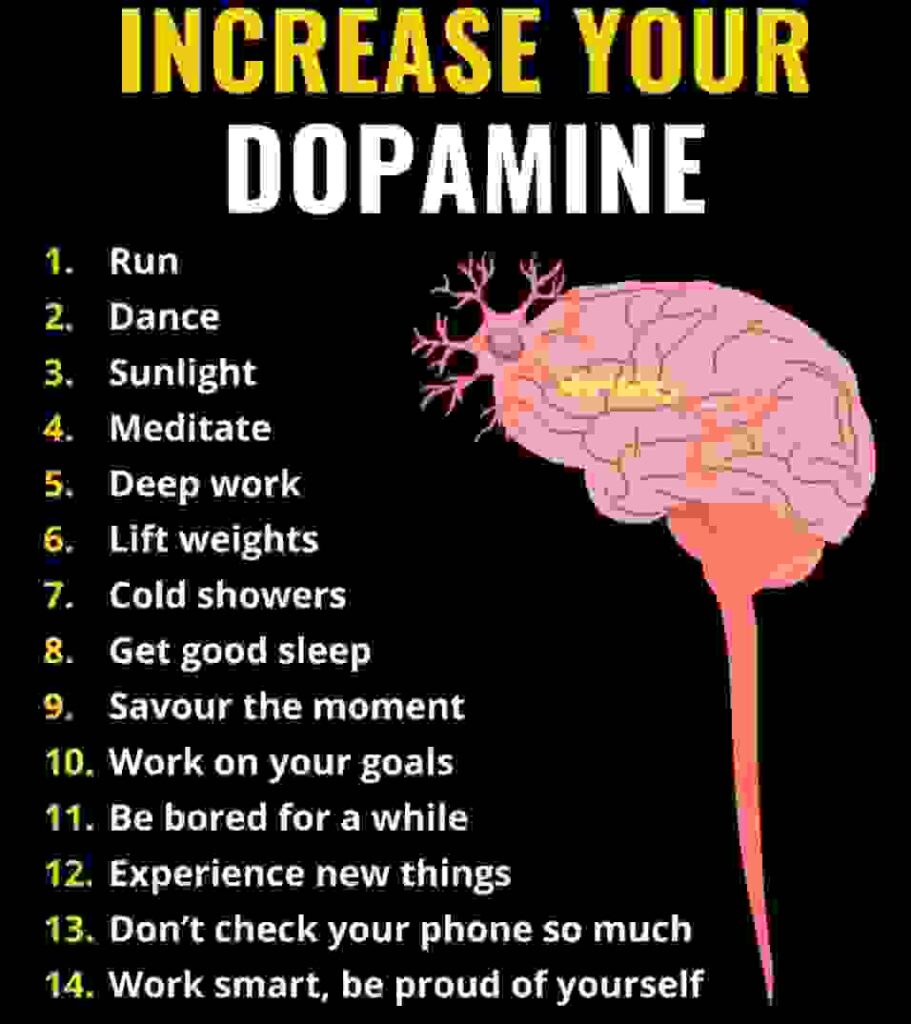
Daily Habits That Support Healthy Motivation
Several habits helped me stay motivated more consistently.
Break Large Goals Into Small Steps
Smaller wins create momentum.
Track Progress
Visible progress reinforces effort.
Exercise Regularly
Physical activity often improves mood and energy levels.
Get Quality Sleep
Sleep affects focus, attention, and cognitive performance.
Reduce Unnecessary Distractions
Protecting attention helps maintain momentum.
Productivity Apps That Help Reinforce Progress
While habits matter most, several tools can help.
Notion
Useful for project organization and progress tracking.
Todoist
Makes large projects easier to break into smaller tasks.
Habitica
Turns habit building into a game-like experience.
Forest
Encourages focused work sessions.
Google Calendar
Supports time-blocking and scheduling.
These tools don’t create motivation automatically.
They simply make progress easier to see.

Common Misunderstandings About Dopamine
One of the biggest myths is that dopamine equals happiness.
Not exactly.
Dopamine is more closely related to motivation and anticipation.
Another misconception is that motivation appears before action.
In many cases, action creates motivation.
Starting a task often generates momentum that wasn’t present beforehand.
This was one of the most important lessons I learned during my productivity experiments.
The Future of Motivation Research
Researchers continue studying how the brain processes rewards, habits, and decision-making.
As technology evolves, we’re learning more about how digital environments influence attention and motivation.
Understanding these mechanisms can help people build healthier relationships with technology and create more effective routines.
Final Thoughts
Learning about dopamine changed how I think about productivity.
I no longer wait to “feel motivated.”
Instead, I focus on taking small actions that create momentum.
Most productive days don’t begin with perfect motivation.
They begin with a simple first step.
The more consistently you take that step, the easier motivation becomes.
Conclusion
Dopamine plays an important role in motivation, habit formation, and goal pursuit.
While it’s often misunderstood as a pleasure chemical, its real strength lies in helping people take action and pursue meaningful objectives.
By focusing on progress, building healthy habits, and reducing distractions, it’s possible to create an environment where motivation develops naturally over time.
FAQ’s
What is dopamine?
Dopamine is a neurotransmitter involved in motivation, learning, attention, and reward processing.
Does dopamine create motivation?
Dopamine is closely linked to motivation and goal-directed behavior, helping encourage actions that may lead to rewarding outcomes.
Can social media affect dopamine?
Digital platforms often use unpredictable rewards that can capture attention and encourage repeated engagement.
How can I improve motivation naturally?
Many people find that exercise, sleep, progress tracking, and reducing distractions help support motivation.
Is dopamine the same as happiness?
No. Dopamine is more strongly associated with motivation and anticipation than happiness itself.
Read More on VitalStack
- Daily Habits That Improve Brain Productivity: Simple Changes That Made a Big Difference
- Large Language Models Transforming Healthcare: Opportunities and Challenges in 2026
- How Screen Time Affects Mental Performance: What I Learned From Tracking My Daily Habits
- At-Home Health Testing and AI Analysis: Trends Shaping Everyday Wellness
- AI for Personalized Nutrition and Fitness: Tailoring Plans to Your Unique Needs

Dr. Priya Sharma is a digital health researcher and AI enthusiast with over 8 years of experience in healthcare technology. She specializes in analyzing the impact of artificial intelligence on medical diagnostics and patient care. Priya is passionate about making complex tech accessible to everyone.
Enjoyed this article?
Subscribe for weekly deep-dives on AI and health — straight to your inbox.