Developing a new medicine has traditionally been one of the most expensive and time-consuming processes in healthcare.
For decades, pharmaceutical companies spent billions of dollars and sometimes over 10 years researching, testing, and approving a single drug. Even after years of effort, many potential medicines failed during clinical trials.
That process is now changing because of artificial intelligence.
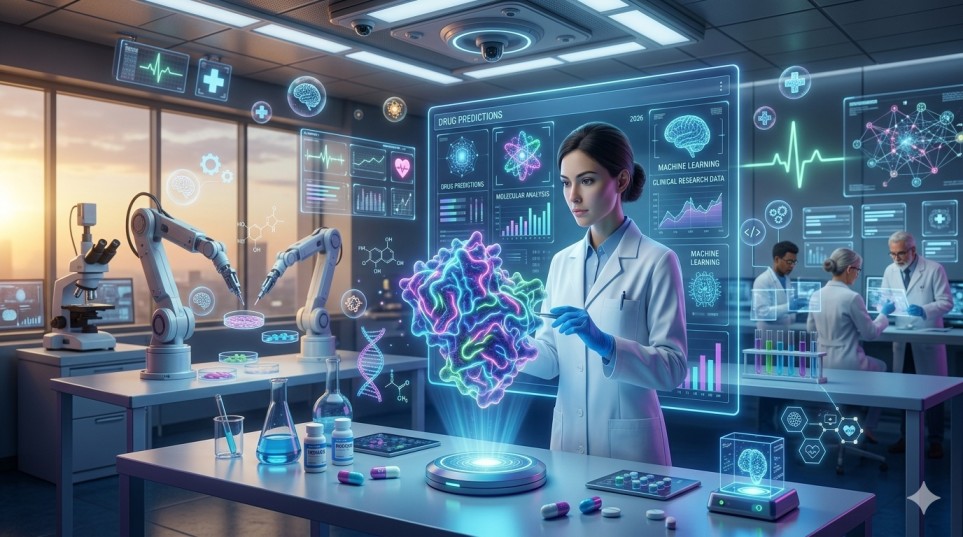
AI drug discovery has become one of the most important innovations in modern healthcare and biotechnology. Instead of relying entirely on traditional laboratory experimentation, researchers can now use machine learning models to analyze massive medical datasets, predict molecular behavior, and identify promising drug candidates much faster.
In 2026, AI is helping pharmaceutical companies accelerate medical research, improve efficiency, and explore treatments for diseases that were previously difficult to target.
This shift is attracting attention from:
- Healthcare companies
- AI startups
- Researchers
- Investors
- Governments
As AI continues improving, experts believe drug discovery could become faster, cheaper, and more personalized over the next decade.
What Is AI Drug Discovery?
AI drug discovery refers to the use of artificial intelligence and machine learning technologies to help identify, design, and test new medicines.
Traditional drug discovery often involves:
- Manual laboratory testing
- Trial-and-error experimentation
- Years of chemical analysis
AI systems can process huge amounts of biological and chemical data much faster than humans.
These systems analyze:
- Protein structures
- Molecular interactions
- Patient data
- Clinical research
- Genetic information
The goal is to identify potential drug compounds more efficiently.
Instead of testing millions of molecules manually, AI models can predict which compounds are most likely to succeed before expensive lab testing begins.
Why AI Drug Discovery Matters in 2026
Healthcare costs continue rising worldwide. At the same time, researchers face increasing pressure to develop treatments faster for:
- Cancer
- Rare diseases
- Neurological disorders
- Viral outbreaks
AI helps reduce some of these challenges.
Faster Research
One of the biggest advantages of AI is speed.
Machine learning models can analyze enormous datasets in hours instead of months. This allows researchers to quickly identify promising drug candidates.
During global health emergencies, faster drug development can save lives.
Lower Development Costs
Drug development is extremely expensive.
Some estimates place the cost of developing a single successful medicine at billions of dollars. AI helps pharmaceutical companies reduce wasted research time and prioritize stronger candidates earlier.
Personalized Medicine
AI is also helping healthcare move toward personalized treatments.
Instead of creating the same medicine for everyone, researchers can use patient-specific data to design more targeted therapies.
This approach may improve treatment outcomes while reducing side effects.
How AI Drug Discovery Works
AI drug discovery combines several advanced technologies.
Machine Learning Models
Machine learning algorithms learn patterns from existing medical and chemical datasets.
Researchers train these systems using:
- Existing drug databases
- Clinical trial outcomes
- Protein interaction data
The AI system then predicts which compounds may work against certain diseases.
Protein Structure Prediction
Understanding protein structures is essential in drug discovery.
AI systems can now predict protein folding and molecular interactions much more accurately than before.
This helps scientists understand how drugs may interact with the human body.
Generative AI for Molecule Design
Some AI systems can generate entirely new molecular structures.
These models simulate potential drug compounds digitally before physical testing begins.
This significantly expands the number of possible treatment candidates researchers can explore.
Real-World Examples of AI Drug Discovery
Several major companies are already investing heavily in AI-driven healthcare research.
Pharmaceutical Companies
Large pharmaceutical companies now partner with AI startups to improve research pipelines.
AI is being used for:
- Cancer research
- Antibiotic development
- Neurological disease treatment
- Rare disease analysis
COVID-19 Research
During the pandemic, AI tools helped researchers:
- Analyze viral structures
- Identify treatment candidates
- Accelerate vaccine research
This demonstrated how AI can support rapid medical innovation during emergencies.
AI Biotech Startups
Many startups now focus entirely on AI-powered drug discovery platforms.
These companies combine:
- Cloud computing
- Biomedical research
- Machine learning
to create faster research systems.
Challenges and Limitations
Despite major progress, AI drug discovery still faces important limitations.
Data Quality Problems
AI systems depend heavily on data quality.
Incomplete or biased datasets can produce inaccurate predictions.
Healthcare data also involves strict privacy and regulatory concerns.
Clinical Trial Complexity
Even if AI identifies promising drug candidates, medicines must still pass:
- Laboratory testing
- Animal studies
- Human clinical trials
AI speeds up early research stages, but medical approval processes remain highly regulated.
Ethical Concerns
Some experts worry about:
- Algorithm transparency
- Bias in healthcare AI systems
- Data privacy risks
Responsible AI development remains essential.
Future Trends in AI Drug Discovery
The future of AI-driven healthcare looks extremely promising.
AI-Powered Personalized Treatments
Researchers are increasingly using patient genetic data to create more personalized therapies.
This could reshape cancer treatment and precision medicine.
Faster Rare Disease Research
Rare diseases often receive limited research attention because of smaller patient populations.
AI may help identify treatment options more efficiently for these conditions.
Integration With Robotics
Some laboratories now combine AI systems with robotic automation.
This allows:
- Faster chemical testing
- Automated experimentation
- Continuous research optimization
Common Misconceptions About AI in Healthcare
AI Will Replace Scientists
AI is a tool, not a replacement for medical researchers.
Human expertise remains critical for:
- Clinical judgment
- Ethical decisions
- Scientific validation
AI Guarantees Successful Drugs
AI improves efficiency, but it does not guarantee successful treatments.
Drug development remains highly complex.
AI Makes Healthcare Instant
AI accelerates research, but medical approval still requires extensive testing and regulation.
Final Thoughts
AI drug discovery is becoming one of the most important intersections between healthcare and technology.
By helping researchers analyze massive datasets, predict molecular behavior, and optimize research pipelines, AI has the potential to transform how medicines are developed in the future.
While challenges remain, the progress happening in 2026 is already reshaping the pharmaceutical industry.
For beginners interested in AI, healthcare, or biotechnology, this field represents one of the most exciting areas of modern innovation.
As artificial intelligence continues evolving, its role in medicine will likely expand even further over the next decade.
Frequently Asked Questions (FAQ)
FAQ 1:
What is AI drug discovery?
AI drug discovery uses artificial intelligence and machine learning to help researchers identify and develop new medicines faster.
FAQ 2:
Why is AI important in pharmaceutical research?
AI helps reduce research time, analyze massive datasets, and improve efficiency in identifying promising drug candidates.
FAQ 3:
Can AI completely replace scientists in healthcare research?
No. AI supports researchers, but human scientists still play a critical role in testing, validation, and clinical decisions.
FAQ 4:
How does AI help develop medicines faster?
AI systems can quickly analyze biological and chemical data to predict which compounds may work against specific diseases.
FAQ 5:
What are the challenges of AI drug discovery?
Major challenges include data quality issues, healthcare regulations, privacy concerns, and the complexity of clinical trials.
🔗 Related Articles
- Ambient AI Scribes vs Full Agentic AI
- What is Agentic AI? A Simple Explanation for Doctors and Everyday People
- This Smart Desk Gadget Helped Me Fix My Posture While Working From Home
- AI-Guided Breathing for Mental Health in 2026
- Google’s New Gmail AI Lets You Talk to Your Inbox Instead of Searching Emails
Enjoyed this article?
Subscribe for weekly deep-dives on AI and health — straight to your inbox.