
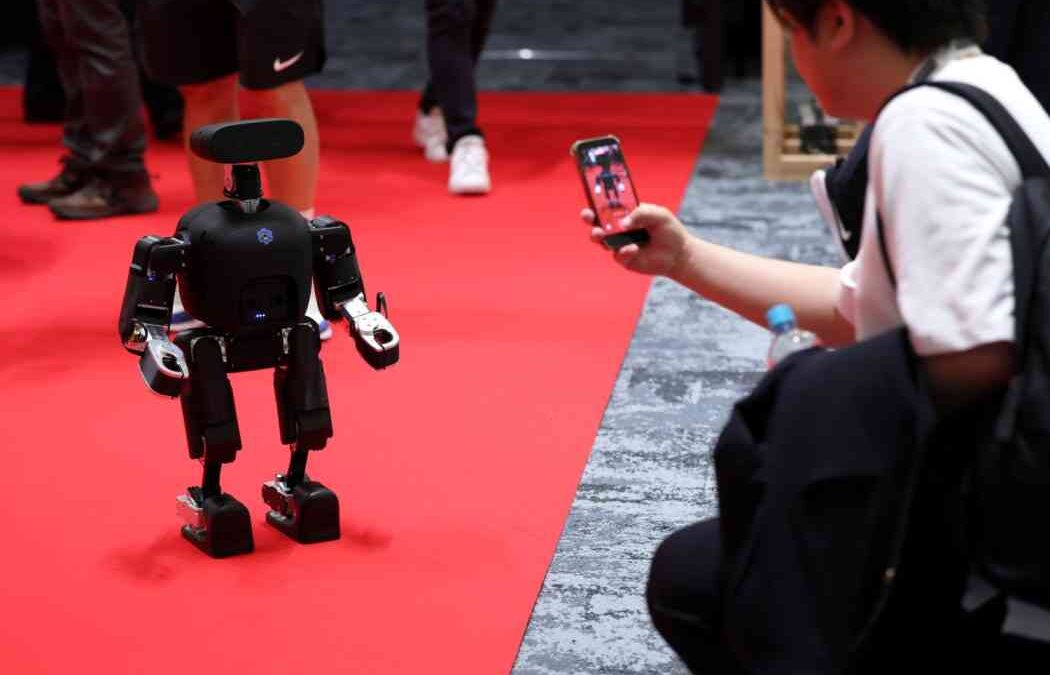
There is big move by the Japan. It is taking a major step toward solving its growing workforce shortage by investing heavily in artificial intelligence and robotics.
The country’s Ministry of Economy, Trade and Industry (METI), together with innovation agency NEDO, has commissioned the development of a next-generation Physical AI model that will allow robots to better understand and interact with the real world.
The long-term goal is to deploy 10 million AI-powered robots across 18 industries by 2040.
Smarter Robots for Everyday Work
Unlike traditional robots that perform repetitive tasks, Japan’s new AI model will combine language, images, video, and sensor data. This will allow robots to understand their surroundings and make better decisions in real time.
The technology is expected to support industries including:
- Healthcare
- Manufacturing
- Restaurants
- Food processing
- Logistics
- Elderly care
Major Companies Join the Project
The project is being led by Noetra in partnership with Japan’s national research institute AIST.
Several of Japan’s biggest technology companies are backing the initiative, including:
- SoftBank
- Sony Group
- NEC
- Honda
The government will review the project’s progress every year before approving additional funding, ensuring the investment delivers real-world results.
Why This Matters
Japan has one of the world’s oldest populations, creating an increasing shortage of workers across multiple industries.
Instead of relying solely on immigration, the country is investing in AI-driven automation to improve productivity while supporting essential services.
If successful, Japan’s Physical AI platform could become a global model for deploying intelligent robots in workplaces and public services.
Read More on VitalStack
- Mistral AI Explained: Everything You Need to Know About Europe’s OpenAI Rival
- AI Helps Mining Companies Improve Safety, Efficiency, and Sustainability
- Travel App Hopper to Pay $35 Million FTC Settlement Over Hidden Fees
- US Homeland Security Investigates New Cyberattack on Intelligence Sharing Network
- Dune AI Keypad Brings One-Tap Meeting Controls to MacBooks
Enjoyed this article?
Subscribe for weekly deep-dives on AI and health — straight to your inbox.