
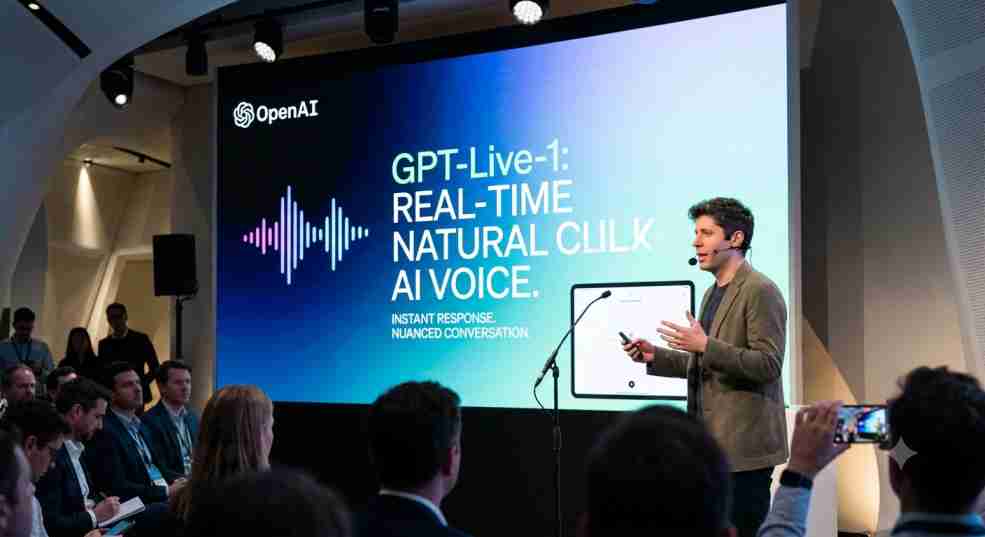
OpenAI today released two new conversational AI models, GPT-Live-1 and GPT-Live-1 Mini, aimed at making voice conversations with ChatGPT smoother and more human-like.
Unlike previous voice systems, these models can listen and speak at the same time, allowing users to interrupt naturally without breaking the conversation. This full-duplex technology creates a more fluid experience that feels closer to talking with another person.
The update is part of OpenAI’s broader effort to make voice a central way people interact with AI.
What Makes GPT-Live-1 Different?
The biggest improvement is real-time conversation handling.
Instead of waiting for users to finish speaking, GPT-Live-1 can understand pauses, interruptions, and changing conversations naturally.
Key improvements include:
- Simultaneous listening and speaking
- Natural turn-taking during conversations
- Better handling of interruptions
- Longer continuous conversations
- Live language translation
- Visual responses when needed
OpenAI says these upgrades make ChatGPT much more responsive during voice interactions.
ChatGPT Gets a New Default Voice Mode
OpenAI is also updating ChatGPT’s Voice Mode.
The company confirmed that:
- GPT-Live-1 Mini becomes the default voice model for all ChatGPT users.
- GPT-Live-1 is available for paid subscribers through ChatGPT’s premium plans.
The new system also connects with OpenAI’s latest GPT models, including GPT-5.5, allowing it to perform searches, reasoning tasks, and more advanced AI capabilities while maintaining a live conversation.
Built for Longer Conversations
According to OpenAI, GPT-Live-1 is designed for extended voice interactions.
The company says users can comfortably hold conversations lasting 30 to 40 minutes without needing to restart or repeat context.
The assistant can even remain silent while listening until it’s needed, making conversations feel more natural than traditional voice assistants.
OpenAI’s Vision for Voice AI
OpenAI believes voice could eventually become the primary way people interact with computers.
The company says future AI assistants may help users manage complex tasks, search for information, perform research, and complete work entirely through voice commands.
Reports have also suggested OpenAI may be developing AI-powered hardware, although the company did not announce any new devices during the launch.
Still Room for Improvement
While the new voice models offer major improvements, OpenAI acknowledged they are still evolving.
During demonstrations, the live translation feature successfully translated conversations, but some languages such as Hindi still sounded less natural, with noticeable accents and formal wording.
The company says it will continue improving multilingual voice quality over time.
Voice AI is becoming one of the fastest-growing areas of artificial intelligence.
With GPT-Live-1, OpenAI is moving beyond simple voice commands and creating an assistant capable of holding longer, more natural conversations.
As companies like Apple, Amazon, and Google continue improving their own AI assistants, advanced voice interaction is expected to become a key feature in future AI products.
Stay updated with the VitalStack.
Read More on VitalStack
- Character.AI Launches AI-Powered Microdrama Series Where Viewers Can Chat With the Characters
- Google Photos Introduces AI Video Remix Tool for Instant Video Editing
- Google Now Uses Your Uploaded Content to Train AI. Here’s How to Opt Out
- Discord AI Moderation Bug Wrongfully Bans Thousands of Users
- Meta Launches Muse Image AI Generator, but Privacy Concerns Quickly Follow
Enjoyed this article?
Subscribe for weekly deep-dives on AI and health — straight to your inbox.