

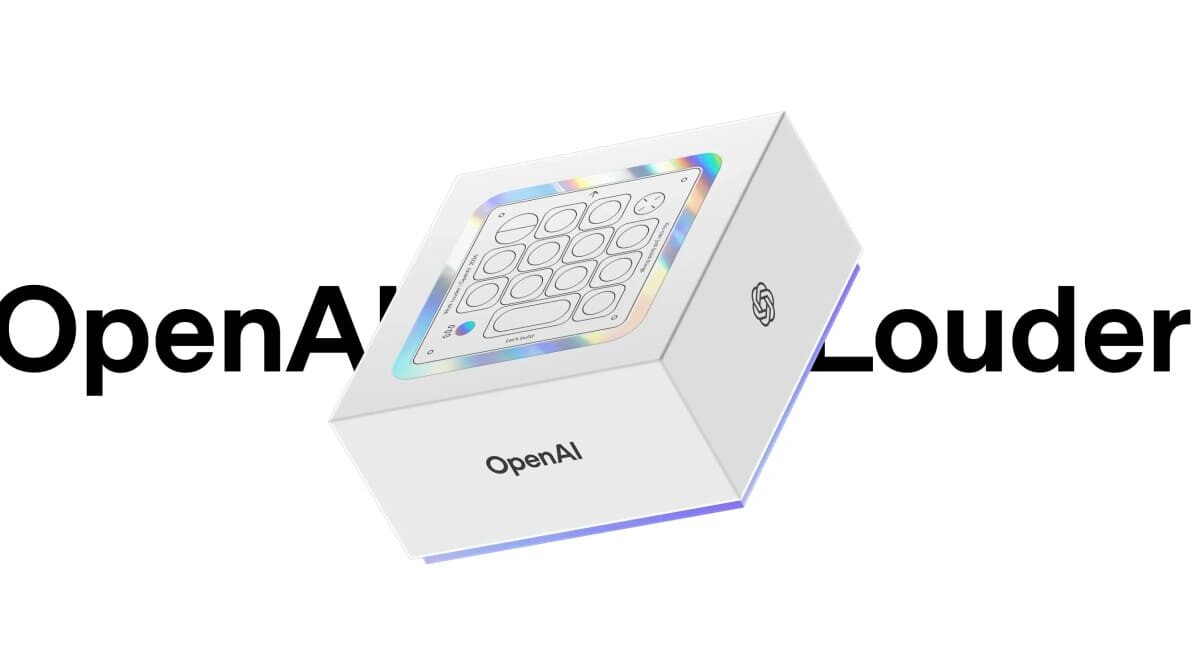
OpenAI has officially stepped into the hardware market with the launch of Codex Micro, a compact AI-focused keyboard designed to work with its coding assistant, Codex.
Priced at $230, the device aims to give developers and AI enthusiasts a more hands-on way to manage AI coding agents directly from their desks.
The launch marks OpenAI’s first consumer hardware product and signals the company’s growing ambitions beyond software and AI models.
What Is the Codex Micro?
The Codex Micro is a compact, customizable keyboard created in partnership with keyboard manufacturer Work Louder.
According to OpenAI, the device is designed to serve as a “command center for agentic work”, allowing users to manage AI-powered coding agents more efficiently.
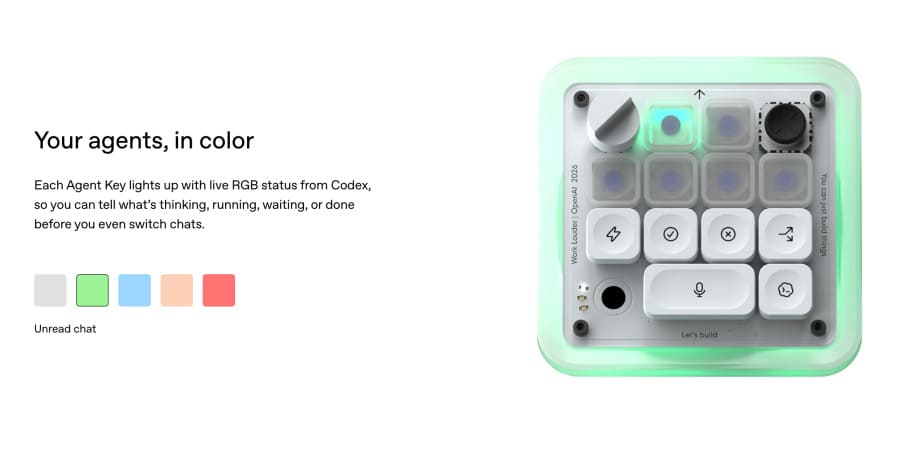
Instead of controlling AI agents through traditional desktop interfaces, users can interact with them using dedicated physical controls built into the keyboard.
Key Features of Codex Micro
The keyboard includes several unique features specifically built for AI workflows:
Agent Keys
Special illuminated keys display the status of AI coding agents in real time.
Users can quickly see whether an AI agent is:
- Working on a task
- Waiting for instructions
- Finished with a project
Command Keys
Customizable shortcut buttons provide one-click access to frequently used Codex actions.
This can help developers automate repetitive tasks and speed up workflows.
Joystick Controls
The built-in joystick allows users to launch common AI workflows and navigate agent controls more efficiently.
AI Reasoning Dial
One of the most interesting features is a dedicated dial that lets users adjust how much reasoning power an AI agent should use.
Higher reasoning settings may improve problem-solving capabilities, while lower settings can help complete tasks faster.
Built for AI Developers
The Codex Micro is aimed primarily at developers who use AI-assisted coding tools.
As AI agents become increasingly capable of writing, testing, and executing code, OpenAI appears to be exploring new ways to improve how people interact with these systems.
The keyboard integrates directly with the ChatGPT desktop application, where users can customize controls and manage AI workflows.
A Limited Edition Product
OpenAI has confirmed that the Codex Micro is a limited-run collaboration.
This suggests the keyboard is more of a specialized product for enthusiasts and developers rather than a mass-market consumer device.
However, it provides an early glimpse into how OpenAI may approach future hardware products.
OpenAI’s Bigger Hardware Ambitions
The keyboard announcement comes shortly after reports surfaced about another OpenAI hardware project currently under development.
According to recent reports, OpenAI is working on a portable AI device that could include:
- ChatGPT integration
- Voice-based interactions
- Screenless operation
- Moving mechanical components
While details remain limited, the project indicates that OpenAI is actively investing in AI-powered hardware experiences.
Legal Challenges Surrounding OpenAI’s Hardware Expansion
OpenAI’s hardware ambitions have also attracted attention due to an ongoing legal dispute involving Apple.
Recent reports suggest some former Apple engineers are involved in OpenAI’s hardware development efforts.
Apple has filed legal claims accusing OpenAI of improperly using confidential information related to hardware projects. OpenAI has denied these allegations.
As AI systems become more capable of completing complex tasks independently, companies are exploring entirely new ways for humans to interact with them.
Instead of using keyboards solely for typing, future devices may act as dedicated control centers for AI agents that perform work on behalf of users.
The Codex Micro represents one of the first products built around this idea.
Read More on VitalStack
- Google Vids Gets AI Avatars and Smarter Video Editing with Gemini Omni
- Google AI Mode Now Works With Popular Apps
- OpenAI Launches a $70 ChatGPT Basketball and Fans Are Wondering Why
- Meta Introduces AI Safety Alerts for Parents When Teens Discuss Self-Harm
- Apple Opens AI-Powered Siri to Everyone with iOS 27 Public Beta
Enjoyed this article?
Subscribe for weekly deep-dives on AI and health — straight to your inbox.