
Google’s latest AI-powered search update is creating mixed reactions online, and some users are now looking for simpler alternatives. One of the biggest beneficiaries appears to be DuckDuckGo, the privacy-focused search engine that lets users search the web without heavy AI integration.
After Google announced major changes to Search during Google I/O 2026, many internet users expressed frustration over the increasing use of AI-generated answers inside search results. Instead of showing the traditional list of website links, Google is now pushing more AI-generated summaries, automated responses, and AI assistants directly inside Search.
For some users, the experience feels useful. But others believe Google Search is becoming too complicated and less reliable for simple searches.
According to DuckDuckGo, installs of its mobile app increased sharply after Google’s announcements. The company said U.S. app installs grew by more than 18% week-over-week and even reached growth peaks above 30% during the past few days. On iPhones, growth reportedly climbed even higher.
DuckDuckGo CEO Gabriel Weinberg criticized Google’s new direction, saying users are being “force-fed AI” without enough control over how Search works.
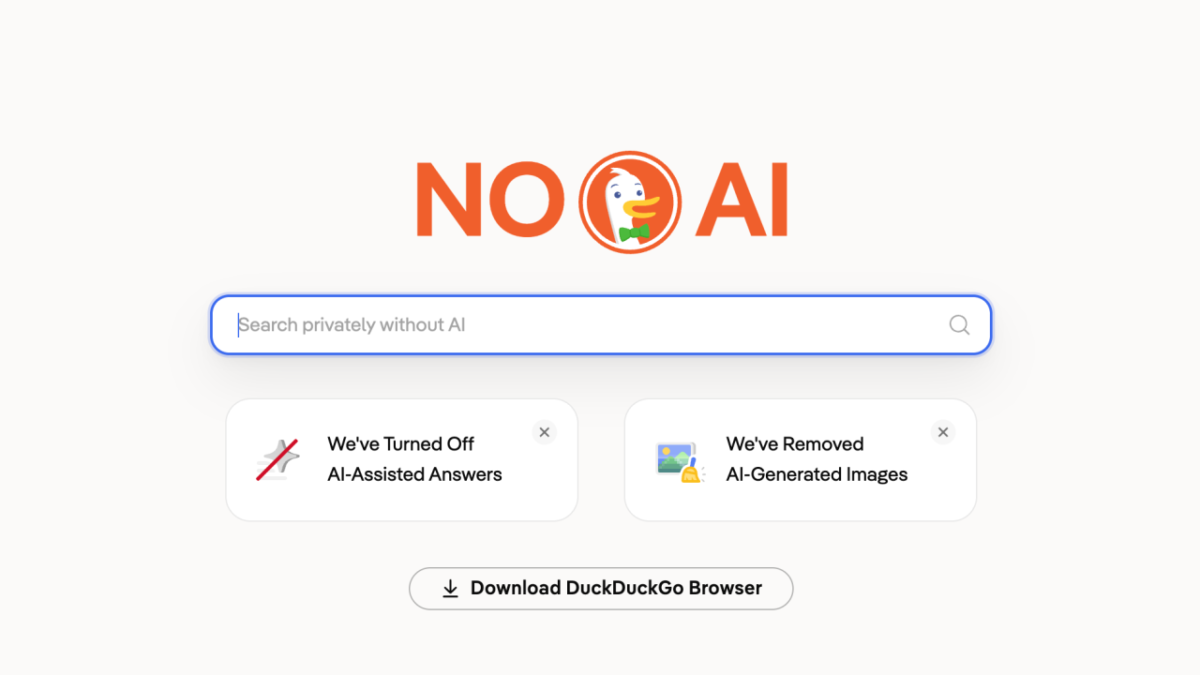
One major reason people are switching is because DuckDuckGo gives users the option to disable AI-powered search features completely. The company even launched a special AI-free search page where users can browse the internet without AI-generated summaries or AI-created images appearing in results.
At the same time, DuckDuckGo is not fully against AI technology. The company also offers its own AI tools called Duck.ai, which provide access to AI models from companies like OpenAI, Anthropic, Meta, and Mistral. However, DuckDuckGo says its focus is on privacy and user control.
The company claims it does not store chat histories, does not track users, and does not use conversations for AI training.
The debate highlights a growing divide in the tech industry. Some users enjoy AI-powered search experiences because they save time and provide direct answers. Others worry that AI-generated responses can sometimes be inaccurate, reduce traffic to websites, and make the internet feel less open.
Many people online also say they miss the older version of Google Search where users could easily explore different websites instead of relying on AI summaries.
While Google still dominates the global search market by a huge margin, the recent spike in DuckDuckGo downloads shows that some users are actively searching for alternatives that feel simpler, cleaner, and more private.
The situation also reflects a larger trend in 2026: users want AI tools, but they also want the freedom to choose how much AI they actually use.
Read More on VitalStack
- Spotify Adds Narrated Magazine Articles Inside Its App
- HMD Launches New Smartphone in India With Built-In Local AI Chatbot Support
- Agentic AI Is Becoming Your Doctor’s New Teammate in 2026
- OpenAI Introduces ChatGPT Finance Tools That Connect to Bank Accounts
- Amazon’s New AI Shopping Assistant Powered by Alexa+
- Digital Health Trends in 2026: What’s Changing in Healthcare?
Enjoyed this article?
Subscribe for weekly deep-dives on AI and health — straight to your inbox.