
Artificial intelligence is continuing to reshape healthcare, and one of the latest innovations comes from an unexpected source. Gidi Littwin, one of the co-inventors behind Apple’s Face ID technology, is now working on AI that could help doctors detect brain disorders quickly, safely, and without surgery.
His startup, Hemispheric, has raised $52 million in funding to develop an AI-powered brain analysis platform designed to identify neurological and mental health conditions such as depression, PTSD, Parkinson’s disease, schizophrenia, and Alzheimer’s disease.
The company believes its technology could one day become as common and affordable as a routine blood test.
How the AI Brain Analysis Works
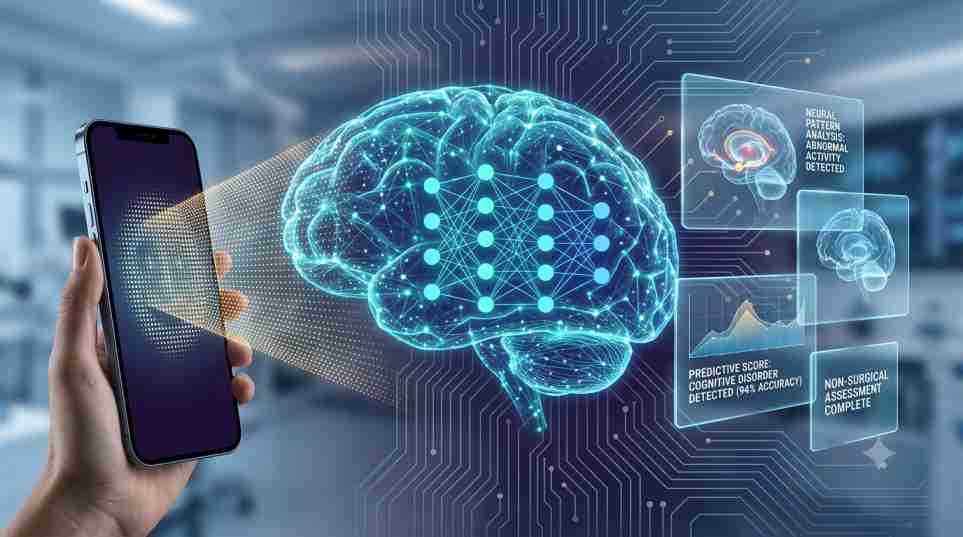
Instead of using invasive medical procedures, Hemispheric relies on a lightweight EEG (Electroencephalogram) headset that records electrical activity inside the brain.
During a short 15-minute session, patients wear the headset while completing simple interactive tasks on a tablet. The collected brain signals are then analyzed using advanced AI models trained to recognize patterns linked to different neurological conditions.
The goal is to provide doctors with faster and more objective information to support diagnosis and treatment decisions.
Trained on Data From 100,000 People
One of the biggest challenges in brain health is that every person’s brain activity is different.
To overcome this, Hemispheric collected brain activity data from more than 100,000 volunteers, representing approximately 250,000 hours of EEG recordings. Participants completed various cognitive exercises designed to activate different regions of the brain.
This massive dataset helped train the company’s deep learning models to better understand normal and abnormal brain activity.
According to the company, early testing has shown promising results in identifying several neurological and mental health conditions.
AI Could Improve Mental Health Diagnosis
Many mental health disorders are currently diagnosed through interviews, questionnaires, and behavioral observations.
While these methods remain important, AI could provide doctors with additional biological insights by analyzing brain activity directly.
Hemispheric believes its platform may eventually help clinicians:
- Detect neurological disorders earlier
- Support more accurate diagnoses
- Recommend personalized treatment options
- Monitor patient recovery over time
The company is also conducting clinical studies to evaluate whether its technology can help predict Alzheimer’s disease before symptoms become severe.
Regulatory Approval Is the Next Step
Hemispheric plans to submit its first AI-powered diagnostic product for FDA review in early 2027.
The company’s first commercial application will focus on Post-Traumatic Stress Disorder (PTSD). If approved, broader clinical use could begin later in 2027.
The startup also plans to continue expanding its AI models by collecting brain data from millions of additional participants in the future.
AI Is Transforming Healthcare
Artificial intelligence is already helping doctors analyze medical images, detect cancers, and improve hospital workflows.
Brain health represents another area where AI could make a significant difference by helping clinicians identify complex neurological conditions earlier and with greater confidence.
Although AI will not replace medical professionals, technologies like Hemispheric’s platform could become valuable decision-support tools for neurologists, psychiatrists, and mental health specialists.
Stay updated with the VitalStack.
Read More on VitalStack
- Prompt Injection Attacks Are Now Stopping Malicious AI Hacking Bots
- Google Changes Gemini AI Usage Limits: Here’s What Every User Needs to Know
- AWS and Bluesight Launch AI Tool to Simplify Hospital 340B Compliance
- AI Memory Chip Shortage Pushes Up Smartphone Prices in India
- China’s Kimi AI Model Sparks Global Debate Over Open-Source Artificial Intelligence
Enjoyed this article?
Subscribe for weekly deep-dives on AI and health — straight to your inbox.