Healthcare looks very advanced from the outside in 2026.
Hospitals now use:
- Digital records
- Smart dashboards
- AI systems
- Online reports
- Automated scheduling tools
But honestly, many doctors are more exhausted than ever before.
Most people think doctors only spend their time treating patients.
But the reality is very different.
A huge amount of their daily routine now involves:
- Updating patient records
- Managing digital systems
- Filling documentation
- Reviewing reports
- Handling insurance paperwork
- Responding to notifications
- Managing follow-ups
And after reading experiences shared by healthcare professionals online, one thing became very clear to me:
many doctors are mentally drained not only because of patients, but because of the overwhelming amount of administrative work surrounding healthcare today.
This is where Agentic AI agents are starting to become an important discussion.
And honestly, this is one of the first AI trends that actually feels practical instead of just futuristic marketing.
What Is Agentic AI in Simple Words?
When people hear the term “Agentic AI,” it honestly sounds very technical at first.
I personally felt confused the first time I saw the phrase online.
But the actual idea is surprisingly simple.
Agentic AI refers to AI systems that can independently complete tasks instead of only responding to instructions.
Traditional AI usually works like this:
- You ask something
- AI responds
- Done
But Agentic AI can:
- Plan tasks
- Organize workflows
- Handle multiple steps
- Continue actions automatically
- Make small decisions
It behaves more like a digital assistant helping behind the scenes.
And in healthcare, that could become extremely useful.
Doctors Are Spending Too Much Time on Screens
One thing I personally noticed while researching this topic is how many doctors talk about “screen fatigue.”
Many healthcare professionals now spend hours looking at:
- Medical software
- Digital records
- Hospital systems
- Notifications
- Administrative dashboards
Some doctors even say they spend almost as much time on computers as they do with patients.
Honestly, that feels frustrating even from an outside perspective.
Technology was supposed to simplify work, but in many cases it added even more digital responsibilities.
And this constant administrative pressure slowly contributes to burnout over time.
How Agentic AI Could Actually Help in Real Hospitals
This is where things start becoming interesting.
Instead of only answering questions like a chatbot, Agentic AI systems could actively help doctors manage repetitive work automatically.
For example, an AI agent could:
- Organize patient histories
- Prepare appointment summaries
- Highlight urgent reports
- Schedule follow-ups
- Track medications
- Create draft documentation
- Sort lab results automatically
The doctor still stays in control.
But the repetitive digital workload becomes smaller.
Honestly, even reducing one hour of administrative work daily could make a huge difference for healthcare workers already handling long shifts and stressful schedules.
A Real-Life Situation Many Doctors Will Understand
Imagine a doctor finishing patient appointments late in the evening.
Most people assume the workday ends there.
But in reality, many doctors still need to:
- Complete patient notes
- Update records
- Respond to digital requests
- Schedule follow-ups
- Review prescriptions
- Organize reports
This extra workload often continues after normal working hours.
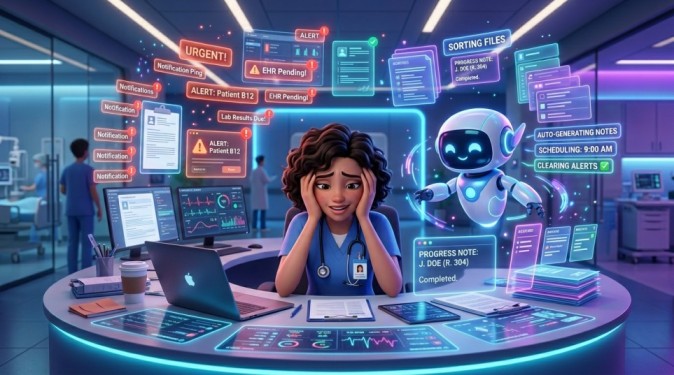
Now imagine an AI assistant quietly helping in the background by:
- Generating summaries automatically
- Organizing records
- Preparing documentation drafts
- Creating reminders
- Sorting patient information
The doctor still reviews everything manually, but the process becomes faster and less mentally exhausting.
Personally, I think this is where AI feels genuinely valuable.
Not because it looks futuristic.
But because it solves a real everyday problem healthcare professionals already struggle with.
My Personal Observation About Modern AI Tools
One thing I’ve personally noticed recently is that AI tools are changing very quickly.
A year or two ago, most AI systems simply waited for commands like:
- “Write this”
- “Summarize this”
- “Translate this”
But newer AI tools now feel much more proactive.
Sometimes they:
- Suggest next steps
- Continue workflows automatically
- Organize information
- Handle repetitive actions
Honestly, it feels less like using software and more like having a digital assistant helping quietly in the background.
And healthcare honestly feels like one of the most important industries where this technology could actually improve daily work environments.
Companies like Google Health and Microsoft Healthcare AI are already exploring AI-powered healthcare workflows and digital medical assistance systems.
AI Should Support Doctors Not Replace Them
This is extremely important to understand.
Whenever people hear about AI in healthcare, many immediately worry that doctors may eventually get replaced.
But realistically, healthcare still needs:
- Human judgment
- Emotional understanding
- Communication
- Experience
- Ethical decision-making
AI cannot truly replace those things.
Personally, I think the best use of AI is reducing repetitive digital pressure so doctors can spend more time focusing on actual patient care.
Because at the end of the day, patients still want human interaction, empathy, and trust.
There Are Still Valid Concerns
Of course, healthcare AI also comes with risks.
Patient data is extremely sensitive.
Hospitals must ensure:
- Privacy protection
- Human supervision
- Secure systems
- Accurate medical support
- Ethical AI usage
Doctors should always remain responsible for final decisions.
AI should assist healthcare professionals not fully control healthcare systems independently.
Why This Discussion Matters So Much in 2026
Healthcare workers everywhere are dealing with increasing mental exhaustion and workload pressure.
And honestly, burnout is no longer just a small industry issue.
It’s becoming a serious healthcare problem globally.
That’s why technologies like Agentic AI are getting so much attention right now.
Not because AI is trendy.
But because hospitals genuinely need better ways to reduce repetitive digital workload.
If AI systems can help doctors:
- Save time
- Reduce stress
- Improve workflow
- Spend more time with patients
then the impact could become very meaningful over the next few years.
Final Thoughts
At first, Agentic AI honestly sounded like another complicated tech buzzword to me.
But after researching how these systems may help reduce repetitive healthcare tasks, the idea started feeling much more practical and realistic.
Personally, I don’t think the future of healthcare AI is about replacing doctors.
I think it’s more about helping healthcare professionals feel less overwhelmed by software systems, documentation, and endless administrative work.
And honestly, if AI can reduce even a small part of doctor burnout, that alone could improve healthcare experiences for both doctors and patients in the future.
🔗 Read More on VitalStack
- Grok 4 vs Claude 4 vs GPT-5 for Medical Research
- What is Agentic AI? A Simple Explanation for Doctors and Everyday People
- This Smart Desk Gadget Helped Me Fix My Posture While Working From Home
- AI-Guided Breathing for Mental Health in 2026
- Google’s New Gmail AI Lets You Talk to Your Inbox Instead of Searching Emails
Enjoyed this article?
Subscribe for weekly deep-dives on AI and health — straight to your inbox.