Artificial Intelligence is changing extremely fast right now.
Just a few years ago, most AI tools were only able to answer questions, generate text, or create images after users gave instructions manually.
But now things are slowly changing.
In 2026, companies are building AI systems that can not only respond to commands but also independently plan tasks, make decisions, and complete actions with very little human guidance.
This is what people now call “Agentic AI.”
Honestly, when I first heard this term online, it sounded unnecessarily complicated.
Most websites explain Agentic AI using technical words that make normal users feel even more confused.
So instead of making this article overly technical, I want to explain it the same way I personally understood it through practical examples and everyday situations.
Because once you understand the basic idea, Agentic AI actually becomes surprisingly easy to understand.
So, What Exactly Is Agentic AI?
In very simple words:
Agentic AI is an AI system that can independently complete tasks and solve problems instead of only replying to questions.
That’s the easiest way to understand it.
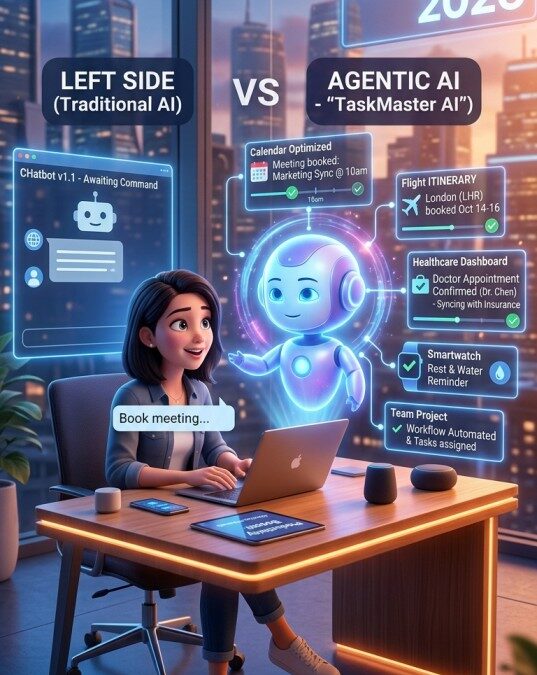
Traditional AI usually works like this:
- You ask something
- AI responds
- The interaction ends
For example:
“Write an email.”
“Summarize this article.”
“Generate an image.”
The AI waits for your command every time.
But Agentic AI works differently.
Instead of only responding, it can:
- Plan tasks
- Analyze situations
- Take actions automatically
- Make decisions
- Complete multiple steps together
It behaves more like a digital assistant that actively helps you achieve a goal.
A Very Simple Everyday Example
Let’s imagine you want to book a doctor appointment.
A normal AI chatbot may:
- Show clinic information
- Suggest doctors
- Give contact details
But Agentic AI could:
- Search nearby clinics
- Compare available timings
- Check your calendar
- Book the appointment
- Send reminders automatically
- Reschedule if needed
And all of this could happen from one simple request.
That’s the real difference.
Agentic AI focuses on completing goals instead of only answering prompts.
Why Is Everyone Suddenly Talking About Agentic AI?
Honestly, the reason is simple.
Businesses now want AI to become more useful in real-world work.
Most companies no longer want AI tools that only generate text for fun.
They want AI systems that can:
- Save time
- Reduce repetitive work
- Handle workflows
- Organize tasks
- Improve productivity
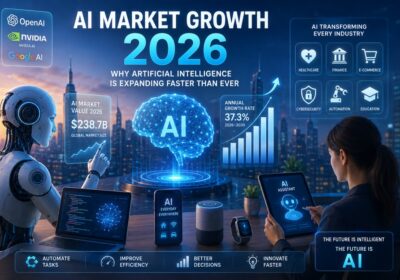
That’s why big companies like Google, Microsoft, and OpenAI are investing heavily in AI agents and autonomous systems.
This is becoming one of the biggest AI trends of 2026.
A Healthcare Example Doctors Will Understand Easily
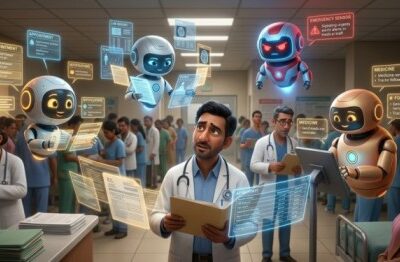
Healthcare is actually one of the best examples for understanding Agentic AI.
Imagine a doctor managing:
- Patient appointments
- Reports
- Follow-ups
- Prescriptions
- Lab results
- Documentation
That creates huge administrative pressure daily.
Now imagine an AI assistant that can:
- Organize patient records automatically
- Highlight urgent cases
- Generate visit summaries
- Track medications
- Suggest follow-up reminders
- Schedule appointments
The AI is not replacing doctors.
Instead, it helps reduce repetitive digital workload so doctors can focus more on actual patient care.
Personally, I think this is where Agentic AI can genuinely become useful.
Many healthcare professionals already feel exhausted because of paperwork and administrative systems.
If AI can reduce even part of that workload, it could save significant time and energy.
My Personal Observation While Using Modern AI Tools
One thing I personally noticed recently is that modern AI tools already feel very different compared to older AI systems.
A year ago, AI mostly waited for direct instructions like:
- “Write this”
- “Summarize this”
- “Translate this”
But newer AI tools are becoming much more proactive.
Sometimes they:
- Suggest next steps automatically
- Continue workflows
- Organize information
- Handle multiple actions together
Honestly, it feels less like using software and more like working with a digital assistant.
And I think this is exactly where Agentic AI is heading.
Another Real-Life Example Most People Will Relate To
Think about planning a vacation manually.
Normally, people spend hours:
- Searching flights
- Comparing hotel prices
- Reading reviews
- Creating schedules
- Adding reminders
- Managing bookings
Now imagine saying:
“Plan a 3-day trip to Mumbai under my budget.”
An advanced Agentic AI system could potentially:
- Find flights
- Suggest hotels
- Build an itinerary
- Organize transportation
- Add reminders
- Recommend restaurants
All automatically.
That’s why many tech experts believe Agentic AI could become the next major shift in technology.
Is Agentic AI Dangerous?
Honestly, this is a very important question.
And yes, there are valid concerns.
If AI systems become more autonomous, companies must carefully handle:
- Privacy
- Security
- Ethical decisions
- Human supervision
Especially in healthcare and finance, human oversight will always remain important.
Personally, I don’t think AI should completely replace human decision-making.
The best use of Agentic AI is probably as a support system that helps humans work faster and more efficiently.
Will Agentic AI Replace Human Jobs?
This is probably the biggest fear people have.
The reality is more balanced.
Some repetitive digital tasks will definitely become automated.
But at the same time, new opportunities and AI-related jobs will continue growing.
Technology has always changed how people work.
Even today, humans still bring things AI cannot fully replace:
- Creativity
- Emotions
- Human understanding
- Communication
- Personal judgment
So instead of replacing everyone completely, Agentic AI will most likely change how work is done.
Final Thoughts
At first, Agentic AI sounds like a complicated futuristic buzzword.
But honestly, the idea behind it is actually very simple.
It’s basically AI that can independently help complete tasks and solve problems instead of only replying to prompts.
Personally, I think the biggest impact of Agentic AI will happen quietly inside tools people already use every day.
From healthcare and customer support to productivity apps and scheduling systems, AI agents will slowly become part of normal digital life.
And right now, we are probably only seeing the beginning of that shift.
🔗 Read More on VitalStack
Enjoyed this article?
Subscribe for weekly deep-dives on AI and health — straight to your inbox.