Healthcare today is becoming more digital than ever before.
Doctors are handling:
- More patients
- More hospital software
- More documentation
- More reports
- More follow-up appointments
And honestly, one of the biggest challenges in modern healthcare is not only treating patients once it’s staying connected with them after treatment.
Because for many health conditions, real care continues long after a patient leaves the hospital.
Especially for chronic diseases like:
- Diabetes
- Blood pressure
- Heart disease
- Asthma
- Thyroid problems
patients often need regular monitoring for months or even years.
That means hospitals and doctors constantly need to:
- Send reminders
- Review reports
- Track medications
- Schedule future appointments
- Monitor patient progress
And honestly, doing all this manually every single day becomes exhausting very quickly.
This is exactly why many healthcare companies are now exploring something called Agentic AI.
At first, the name sounds complicated and futuristic.
But honestly, the idea behind it is actually very practical.
What Is Agentic AI in Simple Human Language?
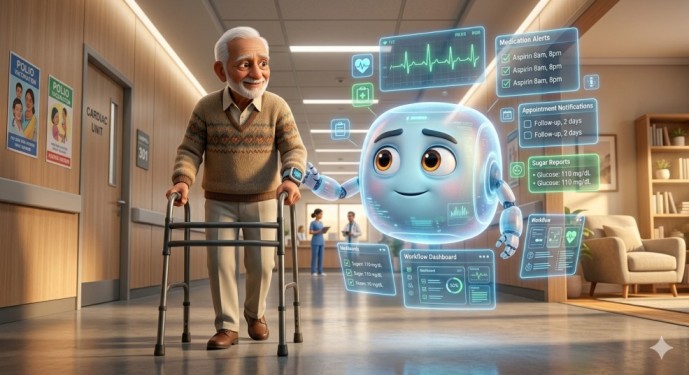
In very simple words, Agentic AI is an AI system that can help manage tasks automatically instead of only answering questions like a normal chatbot.
Think of it like a digital healthcare assistant working quietly in the background.
Instead of doctors or hospital staff manually checking every small task, Agentic AI systems can help:
- Organize patient follow-ups
- Send reminders automatically
- Track appointments
- Monitor healthcare workflows
- Alert doctors when something important is missed
And honestly, in busy hospitals, even small automation improvements can save huge amounts of time.
Why Patient Follow-ups Matter So Much
One thing many people outside healthcare don’t realize is this:
A patient visiting the hospital once is usually not the end of treatment.
In fact, for chronic diseases, follow-up care is often one of the most important parts.
For example:
A diabetic patient may need:
- Monthly sugar reports
- Medication tracking
- Diet monitoring
- Regular doctor consultations
- Lab tests
Now imagine a hospital handling thousands of patients like this every month.
Honestly, manually tracking all those appointments, reminders, and reports becomes extremely difficult.
And sometimes patients simply forget.
People miss appointments.
They forget medicines.
They delay tests.
And unfortunately, even small delays can create bigger health complications later.
A Real-Life Example That Feels Very Practical
Let’s imagine a small clinic handling around 300 diabetic patients.
Normally, the staff may spend hours every day:
- Calling patients manually
- Sending appointment reminders
- Tracking reports
- Updating records
- Managing schedules
Now imagine an Agentic AI system helping with those repetitive tasks automatically.
The AI could:
- Send automatic reminder messages
- Notify patients about upcoming tests
- Flag missed appointments
- Organize patient records
- Alert doctors about urgent cases
The doctor still supervises everything.
But instead of manually tracking every small update, much of the repetitive coordination becomes automated.
Honestly, even saving 1–2 hours daily could make a huge difference for already overloaded healthcare workers.
My Personal Observation While Researching Healthcare AI
While reading about hospital workflows recently, one thing became very obvious to me.
Doctors are not only tired because of patient treatment itself.
A huge amount of stress also comes from:
- Digital systems
- Notifications
- Documentation overload
- Administrative pressure
- Repetitive workflow tasks
And honestly, many healthcare systems still feel unnecessarily complicated.
Even simple follow-up coordination often requires:
- Multiple calls
- Multiple systems
- Multiple reminders
- Manual updates
That’s probably why healthcare AI is now moving beyond simple chatbots and becoming more workflow-focused.
Because reducing repetitive mental workload matters a lot in high-pressure environments like hospitals.
A Very Relatable Heart Patient Example
Imagine a patient leaving the hospital after heart treatment.
The hospital may still need to:
- Schedule follow-up visits
- Monitor medication timing
- Remind the patient about tests
- Check recovery updates
- Review reports regularly
Now imagine if all those reminders and coordination tasks were organized automatically by AI systems.
The patient gets reminders on time.
Doctors receive alerts if something important is missed.
And hospital staff spend less time manually coordinating every detail.
Honestly, this sounds much more practical than the robotic “AI replacing doctors” idea people often imagine online.
Small Improvements Can Still Matter
One thing I personally realized while testing AI productivity tools in my own work is this:
The biggest benefit is not always speed.
Sometimes it’s simply reduced mental exhaustion.
Even repetitive small tasks become tiring after several hours:
- Notifications
- Dashboard updates
- Scheduling
- Checking records
- Managing systems
Now imagine handling that pressure daily inside hospitals where every decision matters.
Honestly, it becomes easier to understand why doctor burnout is becoming such a serious topic globally.
And this is exactly why many healthcare companies are now investing heavily in workflow automation and healthcare AI systems.
Of Course, Doctors Still Have Concerns
Healthcare AI is not perfect.
And honestly, doctors still have completely valid concerns about:
- Patient privacy
- Data security
- AI mistakes
- Overdependence on automation
- Medical responsibility
Because healthcare decisions still require:
- Human understanding
- Emotional communication
- Medical experience
- Ethical judgment
AI can support healthcare professionals.
But realistically, it cannot fully replace human doctors.
And honestly, most patients still want real human interaction when discussing health problems.
The Future of Healthcare AI Looks More Practical Than Futuristic
Interestingly, most hospitals are not trying to replace doctors with robots.
Instead, they are mainly trying to reduce repetitive digital workload and administrative pressure.
And honestly, that approach feels much more realistic.
If AI systems can help healthcare workers:
- Save time
- Stay organized
- Improve follow-up consistency
- Reduce repetitive coordination work
then even small improvements could help both doctors and patients significantly over time.
Final Thoughts
Agentic AI is becoming one of the most talked-about healthcare technologies in 2026.
Not because it replaces doctors.
But because it may help reduce some of the repetitive digital pressure that already overwhelms modern healthcare systems.
Personally, I think patient follow-up and chronic disease management are areas where AI assistance could genuinely become useful if implemented carefully and responsibly.
Because sometimes better healthcare is not only about advanced treatment.
Sometimes it’s simply about making sure patients feel supported, remembered, and connected even after leaving the hospital.
FAQ 1
What is Agentic AI in healthcare?
Agentic AI refers to AI systems that can independently manage workflows, organize tasks, and automate healthcare coordination processes.
FAQ 2
How does Agentic AI help patient follow-ups?
Agentic AI can automate reminders, organize appointments, track reports, and improve communication between hospitals and patients.
FAQ 3
Can AI improve chronic disease management?
AI systems may help improve monitoring, reminders, workflow management, and long-term patient coordination for chronic diseases.
FAQ 4
Will AI replace doctors in hospitals?
No, healthcare still requires human judgment, emotional understanding, and medical expertise that AI cannot fully replace.
FAQ 5
Why are hospitals using healthcare AI?
Hospitals are exploring AI systems to reduce repetitive workload, improve workflow efficiency, and support better patient coordination.
Read More on VitalStack
- How Agentic AI Agents Can Actually Reduce Doctor Burnout in 2026
- What is Agentic AI? A Simple Explanation for Doctors and Everyday People
- Spotify’s Massive AI Expansion Is Changing the App Faster Than Ever
- AI Breakthrough in Age Reversal: Can Technology Extend Human Life in 2026?
- Google’s New Gmail AI Lets You Talk to Your Inbox Instead of Searching Emails

Dr. Priya Sharma is a digital health researcher and AI enthusiast with over 8 years of experience in healthcare technology. She specializes in analyzing the impact of artificial intelligence on medical diagnostics and patient care. Priya is passionate about making complex tech accessible to everyone.
Enjoyed this article?
Subscribe for weekly deep-dives on AI and health — straight to your inbox.