
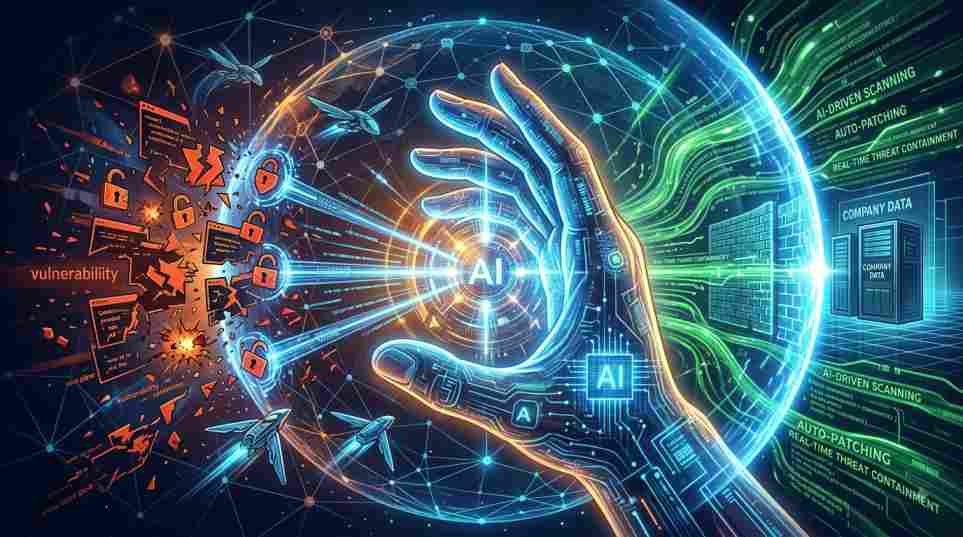
Artificial intelligence is changing cybersecurity by helping researchers find software vulnerabilities faster and assisting security teams with analyzing and fixing them.
The shift is especially important for zero-day vulnerabilities, where attackers may exploit a security flaw before developers have released an official fix.
AI Can Help Find Hard-to-Spot Vulnerabilities
Traditional security tools such as static analysis and fuzzing are effective at finding many common software problems. However, some vulnerabilities involve complicated logic, permissions or assumptions within an application.
AI models can analyze large amounts of source code and look for unusual relationships between functions, permissions and expected behavior.
Google Threat Intelligence reported in 2026 that it had identified a case where it believed an AI model assisted with the development of a zero-day exploit. The discovery highlighted concerns that AI could help attackers identify and weaponize vulnerabilities more quickly.
At the same time, defenders can use similar AI capabilities to examine code and identify potential security weaknesses.
Knowing Where a Vulnerability Exists Is Still a Challenge
Finding a vulnerability is only the beginning.
Modern applications often run inside containers that include operating-system packages, application libraries and dependencies from multiple sources. A vulnerable component may therefore be hidden several layers below the application.
This can make it difficult for security teams to determine exactly which systems are affected.
The Log4Shell vulnerability demonstrated how complicated this process can become. Organizations had to identify applications and systems using vulnerable versions of the Log4j library before they could complete remediation.
Keeping accurate software inventories and software bills of materials can make this process much easier.
AI Can Also Help With Security Fixes
AI is increasingly being used to help developers understand vulnerabilities and create potential patches.
AI tools can analyze vulnerability reports, inspect source code and suggest changes to affected software. Some systems can also combine AI with static analysis, testing and fuzzing to evaluate proposed fixes.
However, AI-generated patches still require careful testing and human review.
A fix that looks correct may introduce another problem or fail to address the underlying vulnerability. Security teams therefore need to validate changes before deploying them.
Faster Discovery Doesn’t Always Mean Faster Protection
One of the biggest lessons from the growing use of AI in cybersecurity is that finding a vulnerability quickly is only part of the problem.
Organizations also need to know:
- Which applications contain the vulnerable component?
- Which container images are affected?
- Which versions are currently running?
- Where are those workloads deployed?
- Has the updated version been tested and deployed?
Without accurate software inventories, even a fast AI-powered security tool may struggle to determine the real scope of an issue.
Read More on VitalStack
Enjoyed this article?
Subscribe for weekly deep-dives on AI and health — straight to your inbox.