If you search for healthcare AI online today, you will probably see many complicated terms like:
- Agentic AI
- Autonomous systems
- AI agents
- Multi-agent workflows
And honestly, most normal people immediately feel confused.
Even many doctors and healthcare workers are still trying to understand what these systems actually do in real life.
So instead of explaining this topic using complicated technical language, let’s understand it in the simplest and most practical way possible.
Because honestly, multi-agent AI is not as futuristic or robotic as it sounds.
First, What Does “Multi-Agent AI” Actually Mean?
In simple words:
A multi-agent AI system means multiple AI systems working together like a team.
That’s it.
Instead of one AI trying to do everything alone, different AI agents handle different tasks together.
Think about how hospitals already work.
Inside a hospital:
- Reception staff manage appointments
- Nurses monitor patients
- Billing teams handle payments
- Lab teams process reports
- Doctors focus on treatment
Everyone has different responsibilities.
Now imagine digital AI assistants helping manage similar workflows behind the scenes.
That is basically what multi-agent AI systems are trying to do.
And honestly, healthcare is one of the industries where this idea actually makes sense.
Why Hospitals Are Exploring AI Right Now
One thing many people don’t realize is how overloaded hospitals already are.
Doctors today are not only treating patients.
They are also handling:
- Documentation
- Reports
- Digital records
- Prescriptions
- Follow-ups
- Administrative coordination
And honestly, many healthcare workers already feel mentally exhausted before their shifts even end.
A doctor may spend:
- 8 hours treating patients
- Then another 2–3 hours updating systems and records
That’s one reason hospitals are exploring AI support systems.
Not because they want robots replacing humans.
But because repetitive coordination work consumes huge amounts of time daily.
A Real Example Most Indian Hospitals Can Relate To
Imagine a hospital in Ahmedabad handling around 500 patients every day.
Normally:
- Staff manually organize appointments
- Reports move between departments slowly
- Follow-up calls take hours
- Patient records get delayed
- Coordination becomes stressful
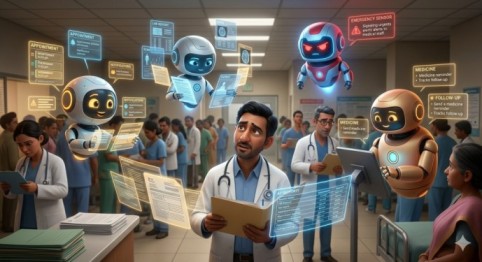
Now imagine multiple AI agents quietly helping in the background.
For example:
One AI agent:
Manages appointments and reminders
Another AI agent:
Tracks patient reports
Another AI agent:
Monitors follow-up schedules
Another AI agent:
Alerts doctors if urgent cases need attention
Doctors still make all medical decisions.
But repetitive workflow pressure becomes smaller.
Honestly, even reducing 1–2 hours of repetitive work daily could help healthcare staff significantly.
My Personal Observation About Hospital Workflows
A few months ago, I visited a hospital with a relative for routine treatment.
What shocked me most was not the treatment process itself.
It was how much time got wasted during coordination.
Patients waited because:
- Reports were delayed
- Records needed updates
- Staff were overloaded
- Departments were disconnected
And honestly, many healthcare workers looked extremely stressed.
That’s when I realized something important.
Sometimes healthcare problems are not only medical.
Sometimes they are workflow problems.
And this is exactly where multi-agent AI systems may actually help.
A Practical Test Case That Makes Sense
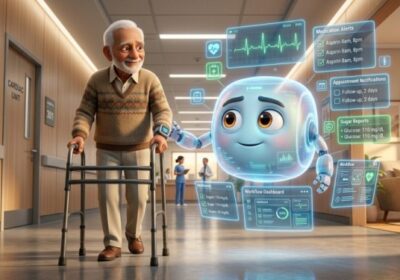
Let’s imagine a diabetic patient who needs:
- Monthly checkups
- Medicine reminders
- Blood sugar tracking
- Regular lab tests
In many hospitals today:
- Patients forget appointments
- Staff manually call patients
- Reports get delayed
- Follow-up coordination becomes messy
Now imagine a multi-agent AI system helping automatically.
The system could:
- Send appointment reminders
- Organize reports digitally
- Alert doctors about missed follow-ups
- Track patient timelines
- Help schedule future visits
Honestly, these small workflow improvements may not sound revolutionary.
But for hospitals managing thousands of patients daily, they can save enormous amounts of time.
Multi-Agent AI Is Different From ChatGPT-Style AI
Many people think every AI system works like a chatbot.
But healthcare multi-agent systems are different.
A chatbot mainly:
- Answers questions
- Responds to prompts
But multi-agent systems can:
- Coordinate tasks
- Share workflow responsibilities
- Organize hospital processes
- Manage repetitive systems automatically
Think of it like:
A digital hospital support team instead of one chatbot.
Why India Could Become Very Important for Healthcare AI
India has one of the world’s largest healthcare systems.
Every day:
- Millions of patients visit hospitals
- Clinics manage huge workloads
- Staff shortages create pressure
- Administrative tasks continue growing
And honestly, many hospitals still rely heavily on manual coordination.
That’s why practical AI systems are becoming more attractive now.
Especially AI focused on:
- Workflow automation
- Patient coordination
- Hospital organization
- Reducing staff overload
Not just flashy futuristic AI demonstrations.
But Healthcare AI Still Has Challenges
Of course, AI in healthcare also raises important concerns.
Hospitals still worry about:
- Patient privacy
- Data security
- AI mistakes
- System reliability
- Language support
- Internet connectivity
And honestly, these concerns are completely valid.
Healthcare is sensitive.
Even small errors can create serious consequences.
That’s why human supervision will always remain extremely important.
AI can support healthcare workers.
But realistically, it cannot replace doctors.
My Honest Opinion About Healthcare AI
Personally, I think the best healthcare AI systems are not the most futuristic-looking ones.
The real value comes from:
- Saving doctors time
- Improving coordination
- Reducing repetitive workload
- Helping hospitals stay organized
Because honestly:
Doctors already know how to treat patients.
The real problem many hospitals face today is managing time, systems, and coordination efficiently.
And if AI can reduce even a small portion of that pressure, it could genuinely improve healthcare experiences for both staff and patients.
Final Thoughts
Multi-agent AI systems are slowly becoming one of the most practical healthcare technology trends in 2026.
Not because they replace doctors.
But because they help hospitals:
- Improve workflows
- Reduce repetitive work
- Organize patient management better
- Support healthcare staff
And honestly, in countries like India where hospitals handle extremely high patient volumes daily, even small workflow improvements can create a very big impact over time.
The future of healthcare AI will probably not look like science fiction movies.
Instead, it may quietly work in the background helping doctors spend more time with patients and less time managing repetitive digital tasks.
FAQ
What is a multi-agent AI system?
A multi-agent AI system uses multiple AI agents working together to manage different tasks and workflows.
How can multi-agent AI help hospitals?
Hospitals may use multi-agent AI to improve scheduling, patient coordination, documentation, and workflow efficiency.
Can healthcare AI replace doctors?
No, healthcare still requires human expertise, emotional understanding, and medical decision-making.
Why are hospitals using healthcare AI?
Hospitals are exploring AI tools to reduce repetitive workload and improve healthcare organization.
Is healthcare AI growing in India?
Yes, hospitals and healthcare startups in India are increasingly exploring AI-based workflow automation systems.
Read More on VitalStack
- How Agentic AI Agents Can Actually Reduce Doctor Burnout in 2026
- What is Agentic AI? A Simple Explanation for Doctors and Everyday People
- Can AI Agents Really Reduce Administrative Workload for Indian Doctors in 2026?
- AI Breakthrough in Age Reversal: Can Technology Extend Human Life in 2026?
- Google’s New Gmail AI Lets You Talk to Your Inbox Instead of Searching Emails
Enjoyed this article?
Subscribe for weekly deep-dives on AI and health — straight to your inbox.