


Artificial intelligence is slowly becoming more personal.
After helping users write emails, generate code, summarize documents, and answer everyday questions, ChatGPT is now expanding into personal finance.
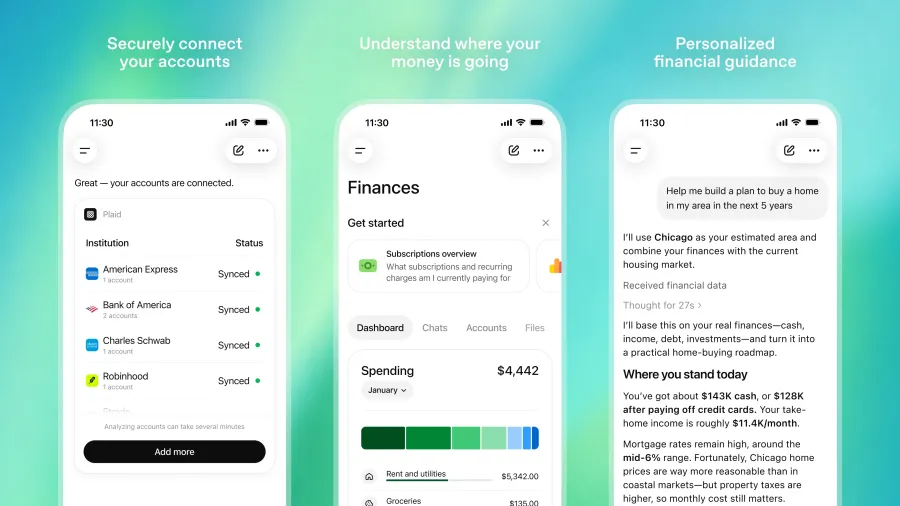
OpenAI has officially launched a new finance-focused experience for ChatGPT Pro users in the United States, allowing people to connect their bank accounts and ask financial questions directly inside ChatGPT.
The new feature is currently available in preview and represents one of OpenAI’s biggest steps yet into financial technology.
And honestly, this move feels significant because it shows how AI assistants are evolving beyond simple chatbots into tools that can manage more personal and data-sensitive parts of daily life.
ChatGPT Can Now Analyze Spending and Financial Activity
The new finance tools allow users to connect accounts from more than 12,000 financial institutions through a partnership with Plaid.
Supported platforms include:
- Chase
- Fidelity
- Schwab
- Robinhood
- Capital One
- American Express
Once connected, users can access a financial dashboard directly inside ChatGPT.
The system can display:
- Spending trends
- Portfolio performance
- Subscriptions
- Upcoming payments
- Financial activity summaries
Instead of manually sorting through banking apps and spreadsheets, users can ask natural questions like:
- “Why have my expenses increased recently?”
- “How much am I spending on subscriptions?”
- “Can I realistically buy a house in five years?”
- “Where could I reduce monthly spending?”
This reflects a much bigger trend happening across the AI industry right now.
People are increasingly using AI systems not just for information, but for decision-making support and personalized recommendations.
OpenAI Is Moving Deeper Into Financial AI
The launch comes shortly after OpenAI acquired the team behind personal finance startup Hiro earlier this year.
While OpenAI has not fully explained how much of the new finance product was built using Hiro’s technology, the acquisition clearly shows the company’s growing interest in AI-powered financial tools.
And honestly, this direction was probably inevitable.
Millions of users already ask ChatGPT questions related to:
- Budgeting
- Investing
- Taxes
- Credit cards
- Saving money
- Financial planning
OpenAI says more than 200 million users ask finance-related questions every month.
That’s a massive number.
It also explains why AI companies are now building more specialized systems for areas like:
- Healthcare
- Finance
- Productivity
- Research
The Bigger Shift Toward “Personal AI”
One of the most interesting parts of this announcement is not just the finance dashboard itself.
It’s what this represents for the future of AI assistants.
AI tools are becoming increasingly integrated into personal life.
Instead of functioning like simple search engines, modern AI systems are slowly evolving into assistants that:
- Understand habits
- Track preferences
- Analyze patterns
- Provide proactive suggestions
In many ways, AI companies are trying to create systems that feel less like software and more like digital companions.
And finance is one of the most sensitive and important areas people deal with daily.
That makes this launch both exciting and controversial at the same time.
Privacy and Trust Will Matter a Lot
Connecting bank accounts to AI systems naturally raises privacy concerns.
Financial information is highly personal, and many users may hesitate before giving an AI assistant access to spending history and financial behavior.
OpenAI says users can disconnect accounts anytime through ChatGPT settings.
According to the company:
- Synced financial data is removed within 30 days after disconnection
- Users can manage and delete financial memories
- Account connections are handled through Plaid
Still, trust will likely become one of the biggest challenges for AI-powered finance tools moving forward.
People may enjoy the convenience of personalized financial guidance, but they will also want reassurance that their information is being handled securely.
And honestly, that balance between convenience and privacy may define the next generation of AI products.
AI Finance Tools Could Change How People Manage Money
Traditional financial management can feel overwhelming for many people.
Budgeting apps, spreadsheets, investment platforms, and banking systems are often fragmented and difficult to organize.
AI assistants could simplify that experience significantly.
Instead of manually analyzing spending reports, users may increasingly rely on AI to:
- Explain financial habits
- Identify wasteful spending
- Suggest savings strategies
- Plan long-term goals
- Monitor subscriptions automatically
For beginners especially, conversational finance tools may feel much easier to use than traditional financial software.
That accessibility could become one of the biggest reasons AI finance products grow rapidly over the next few years.
OpenAI Is Expanding Beyond Traditional Chatbots
This latest launch also highlights how competitive the AI industry is becoming.
Companies are no longer building chatbots that only answer questions.
Instead, they are building AI ecosystems connected to:
- Personal data
- Workflows
- Productivity tools
- Shopping systems
- Healthcare platforms
- Financial services
Earlier this year, AI companies also introduced:
- AI shopping assistants
- AI healthcare tools
- AI research systems
- AI-powered personal assistants
The goal is becoming increasingly clear:
AI companies want their systems to become deeply integrated into everyday digital life.
Final Thoughts
OpenAI’s new ChatGPT finance tools show how quickly AI assistants are evolving from information tools into personalized digital systems.
The ability to connect bank accounts, analyze spending behavior, and help users plan financially could make AI much more useful in everyday life.
At the same time, this shift also raises important questions around:
- Privacy
- Data security
- Trust
- AI dependency
One thing is becoming increasingly clear in 2026 though:
Artificial intelligence is no longer just helping people search for information.
It’s starting to help people manage real parts of their lives.
🔗 Read More Articles

Dr. Priya Sharma is a digital health researcher and AI enthusiast with over 8 years of experience in healthcare technology. She specializes in analyzing the impact of artificial intelligence on medical diagnostics and patient care. Priya is passionate about making complex tech accessible to everyone.
Enjoyed this article?
Subscribe for weekly deep-dives on AI and health — straight to your inbox.