
A Silicon Valley startup called Human Archive is making headlines after revealing how it is using India’s growing gig economy to collect real-world data for training future AI robots.
The company recently raised $8.2 million in funding from major investors connected to companies like OpenAI, NVIDIA, and Google.
And honestly, the idea sounds both futuristic and slightly surprising.
How the Startup Collects Data
Human Archive partners with workers in industries like:
- Home services
- Restaurants
- Hotels
- Cleaning services
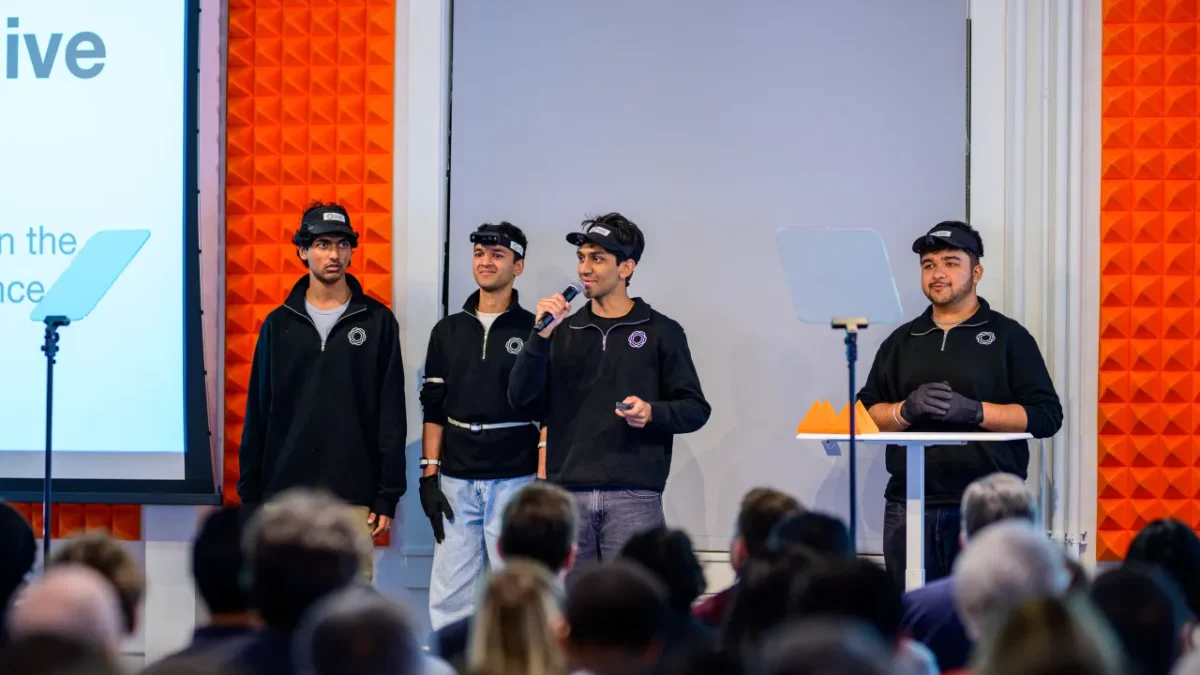
Workers wear special caps fitted with cameras that record first-person video while they work.
This helps collect “egocentric data,” which basically means real-world human activity recorded from a worker’s point of view.
The company believes this data can help train future robots and AI systems to perform physical tasks more naturally.
For example:
- Cleaning rooms
- Delivering food
- Cooking
- Organizing objects
- Handling household work
Honestly, many AI companies today are struggling because robots still lack enough real-world training data.
Why India Became Important for This AI Project
India’s gig economy has grown rapidly in recent years.
Platforms for:
- Food delivery
- Home cleaning
- Repairs
- Household services
have become extremely popular across Indian cities.
Human Archive believes India provides a large-scale opportunity to collect real-world human workflow data at scale.
The startup reportedly already has:
- More than 1,000 active recording headsets
- Multiple data collection partnerships
- Different hardware devices for motion tracking
The Startup Uses More Than Just Cameras
Interestingly, the company is not only recording video.
It is also testing:
- Motion capture suits
- Wrist cameras
- Sensor-equipped gloves
- Depth tracking systems
The goal is to teach robots:
- Human movement
- Hand pressure
- Body coordination
- Real-world interactions
And honestly, this shows how serious the race for robotics AI has become globally.
Some Indian Companies Rejected the Idea
According to reports, several Indian startups reportedly refused to partner with Human Archive.
Some companies raised concerns about:
- Worker privacy
- Data collection ethics
- Consent
- Customer trust
And honestly, many people online are also debating whether this type of recording should become normal workplace behavior.
The company says:
- Workers give consent
- Customers can choose recorded or non-recorded services
- Faces are blurred
- Data is anonymized
Still, privacy concerns remain one of the biggest discussion points around the project.
Customers Can Choose Discounted Services
One interesting part of the system is how customers are given options.
When workers arrive:
- Customers can pay full price for private service
OR - Choose discounted services if they agree to recording
The startup says many users accept recorded visits because the footage may help solve service disputes later.
Honestly, this part of the story feels both practical and controversial at the same time.
Why AI Companies Need This Data
Today’s AI systems are becoming very good at:
- Writing
- Chatting
- Generating images
- Coding
But robots still struggle with many simple physical tasks humans perform daily.
For example:
- Folding clothes
- Cleaning tables
- Organizing kitchens
- Carrying objects safely
That’s why companies are now looking for massive amounts of real-world training data.
And this is exactly where Human Archive believes it has an opportunity.
India Is Becoming Important in the Global AI Economy
This story also highlights something much bigger.
India is no longer only becoming a market for AI tools.
It is slowly becoming part of the AI infrastructure itself.
From:
- AI development
- Language models
- Data collection
- Gig-based AI workflows
India’s role in the global AI ecosystem is clearly growing much faster now.
Final Thoughts
Human Archive’s approach may sound unusual today, but it reflects how rapidly the AI and robotics industry is evolving.
The company believes everyday human work could become valuable training material for future robots.
At the same time, the project raises important questions about:
- Worker privacy
- Consent
- Ethical AI training
- Data ownership
And honestly, as AI companies continue racing to build smarter robots, conversations around ethics and privacy will likely become just as important as the technology itself.
Read More on VitalStack
- HMD Launches New Smartphone in India With Built-In Local AI Chatbot Support
- AI Market Growth Statistics in 2026: How Fast Is the Industry Growing?
- This Smart Desk Gadget Helped Me Fix My Posture While Working From Home
- OpenAI Introduces ChatGPT Finance Tools That Connect to Bank Accounts
- Amazon’s New AI Shopping Assistant Powered by Alexa+
- Digital Health Trends in 2026: What’s Changing in Healthcare?

Dr. Priya Sharma is a digital health researcher and AI enthusiast with over 8 years of experience in healthcare technology. She specializes in analyzing the impact of artificial intelligence on medical diagnostics and patient care. Priya is passionate about making complex tech accessible to everyone.
Enjoyed this article?
Subscribe for weekly deep-dives on AI and health — straight to your inbox.